

Last updated October 9, 2026
Free in-home measure and quote - PGT, CGI and CWS impact lines compared on your actual openings, style by style
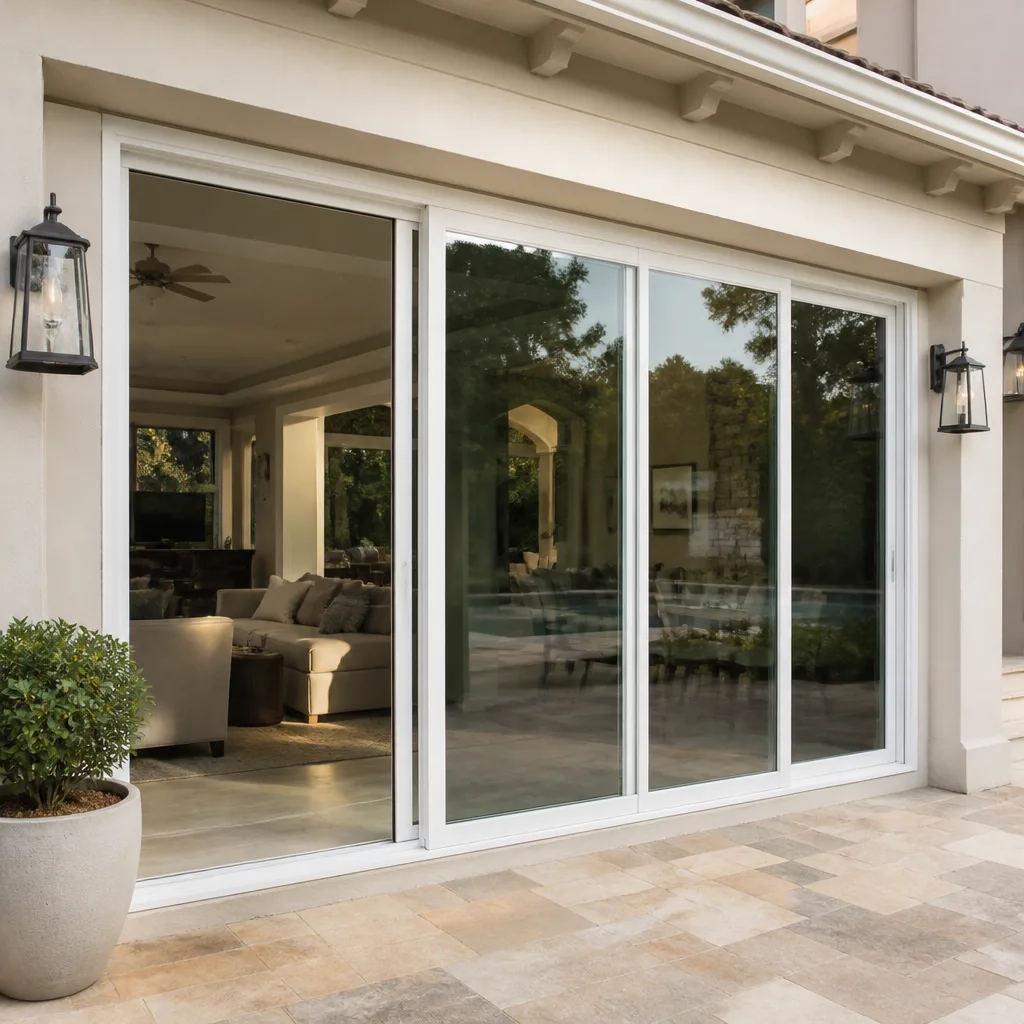
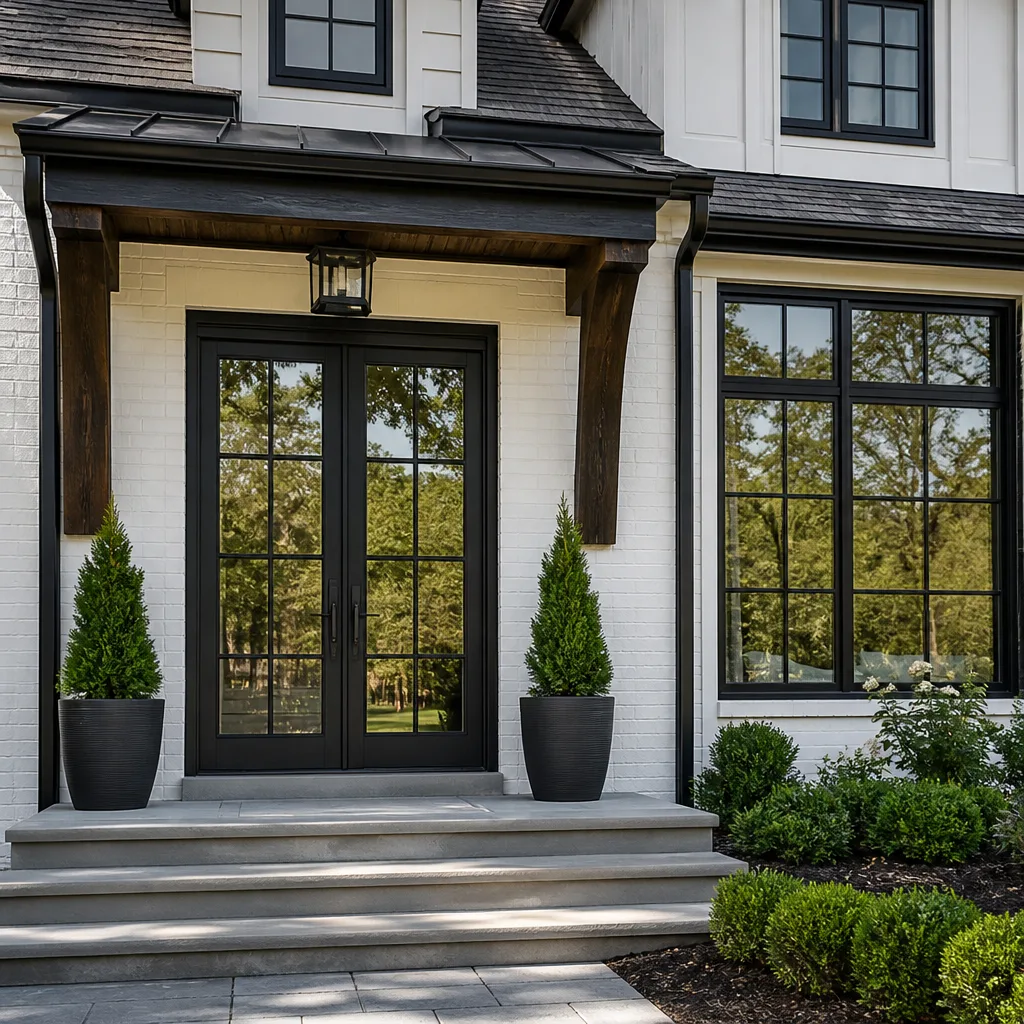
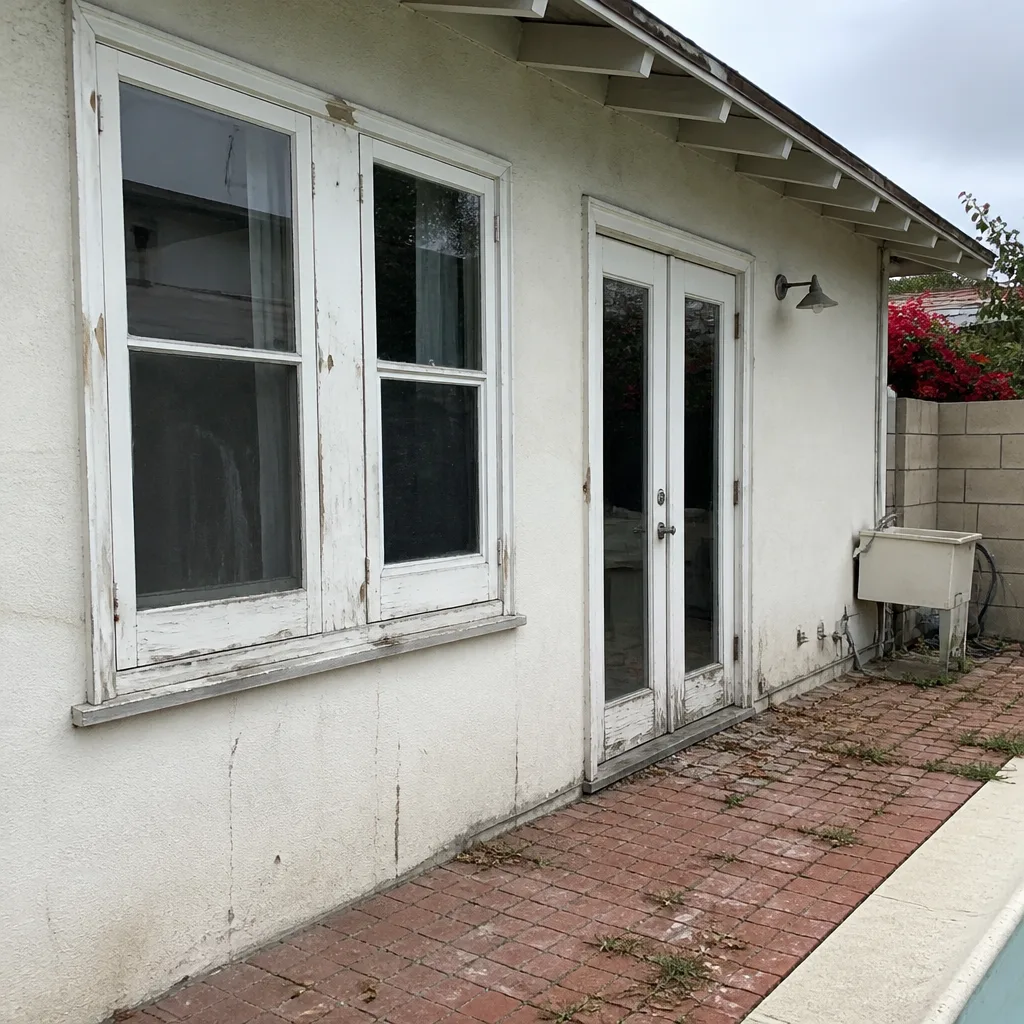 Before
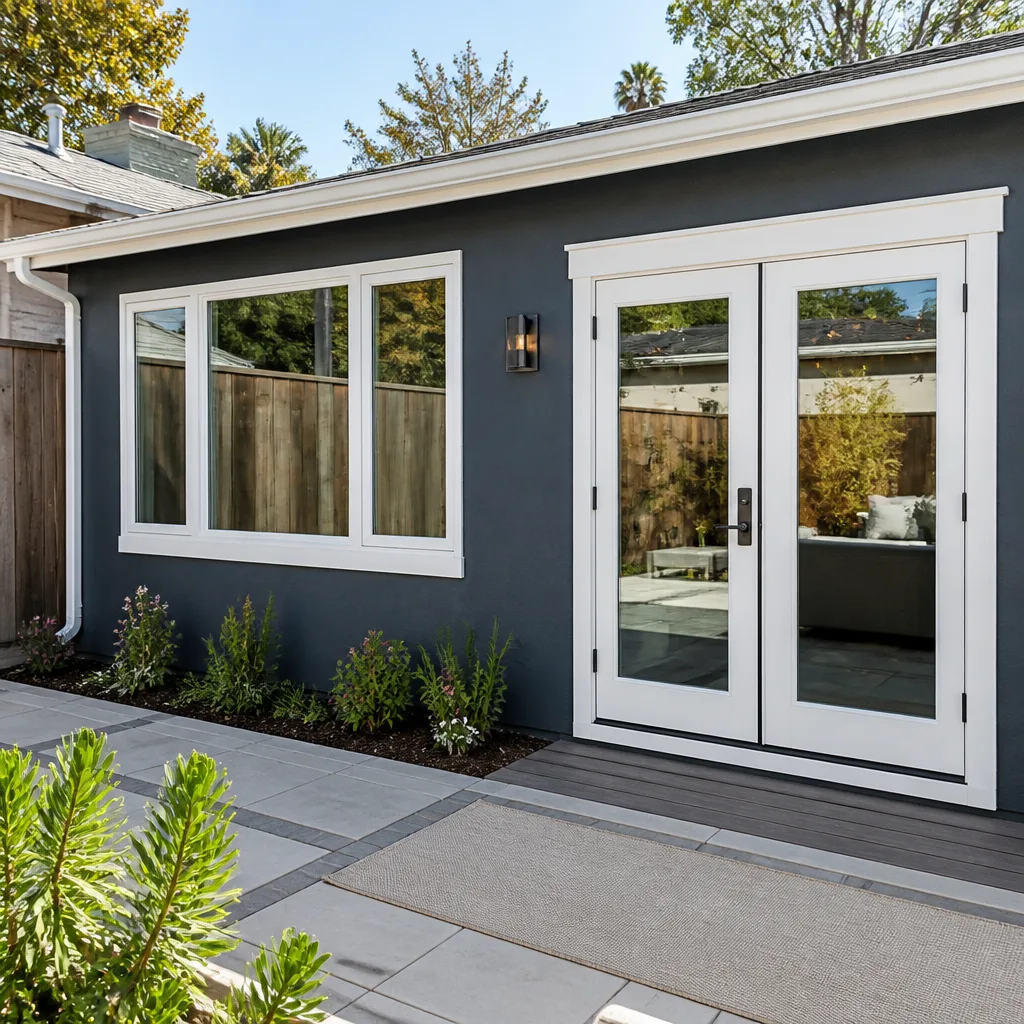 After
After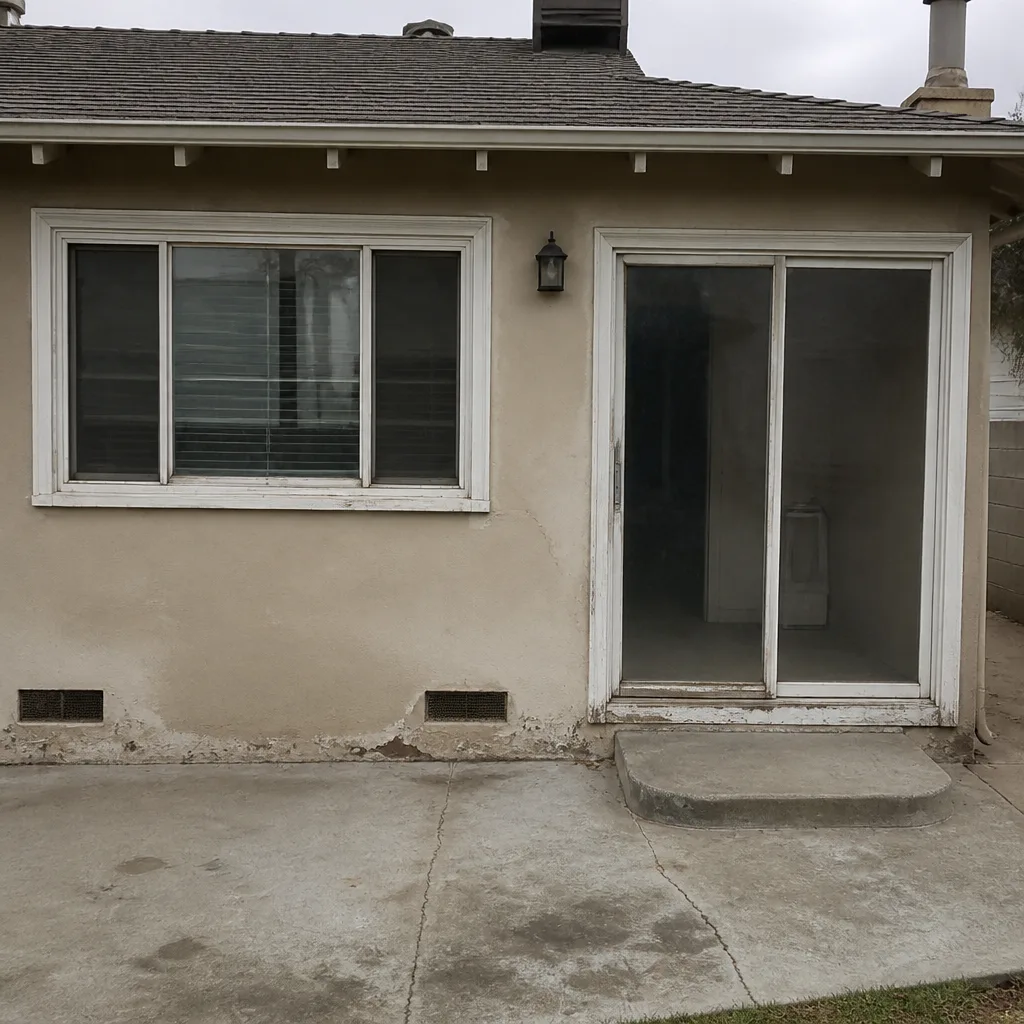 Before
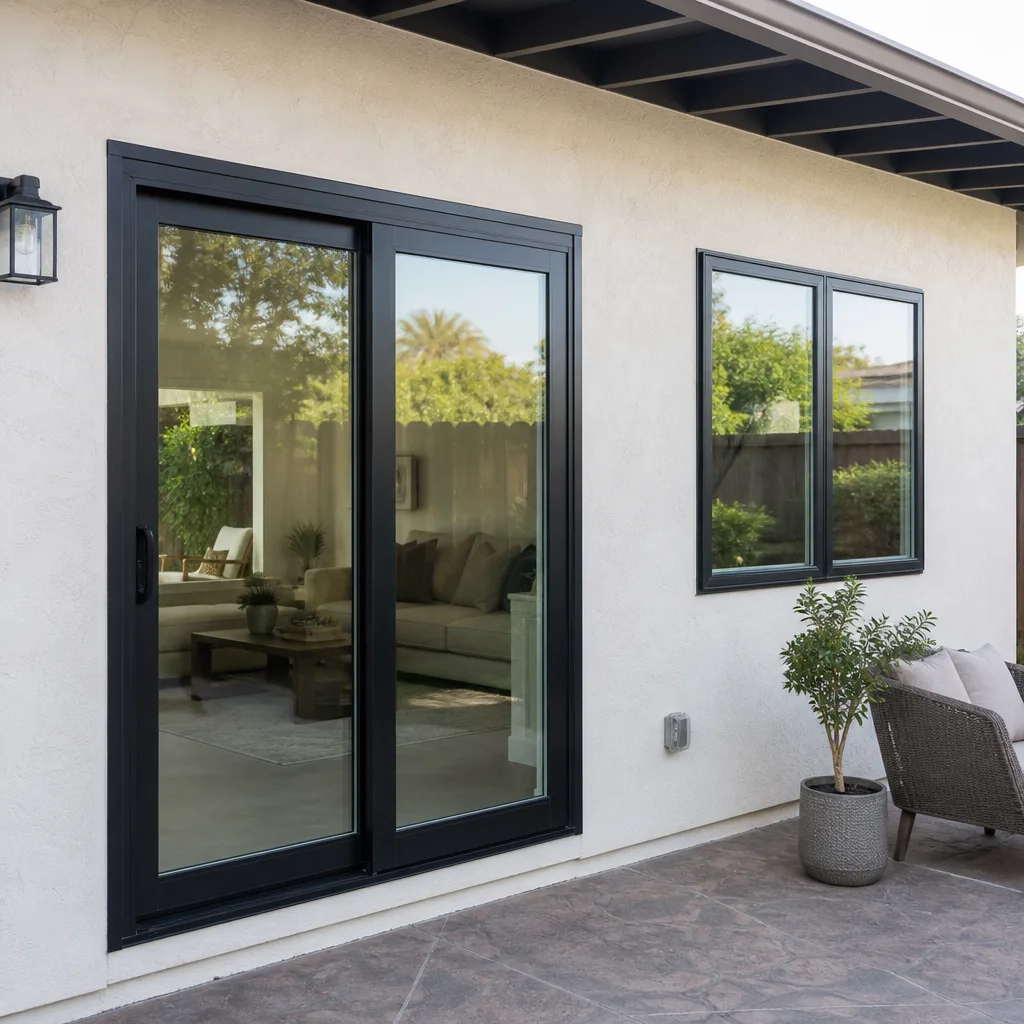 After
After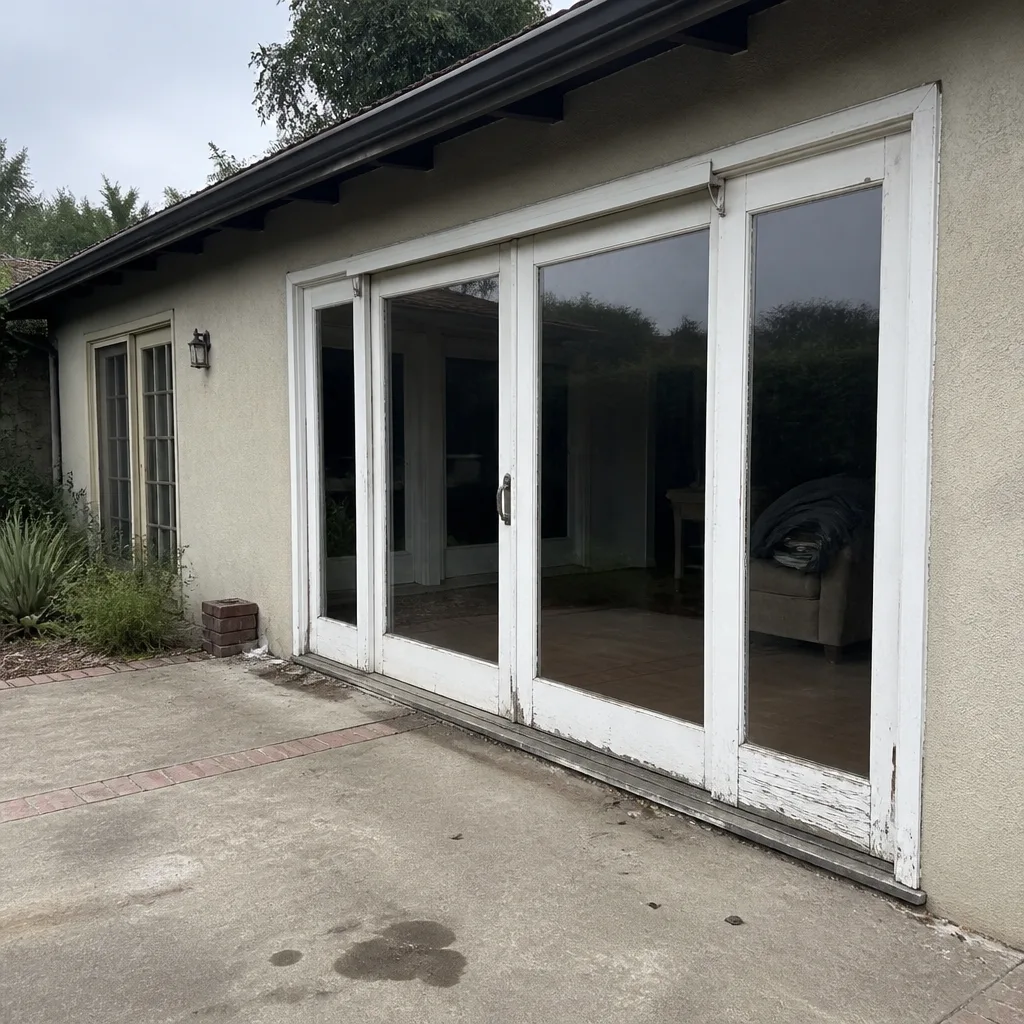 Before
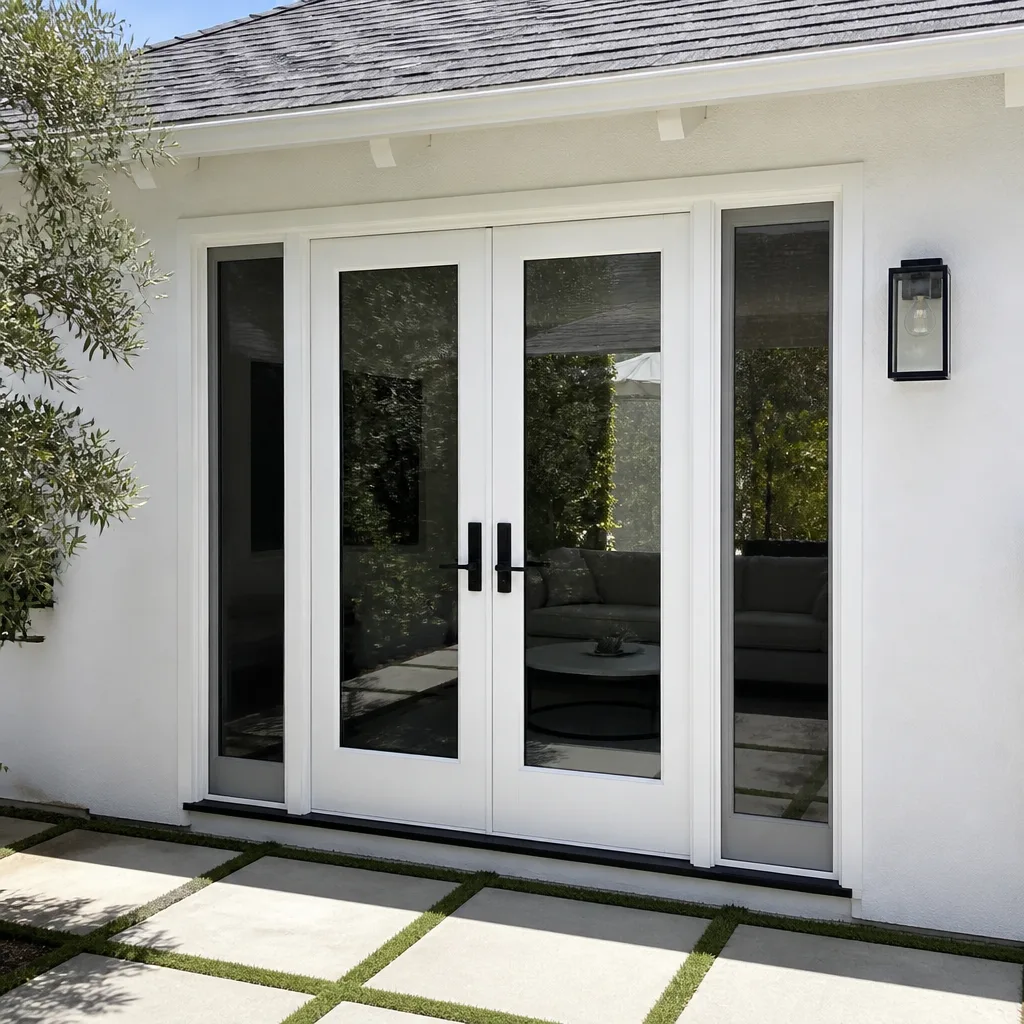 After
AfterWindows & Doors Emergency Preparedness Guide for Los Angeles Homes
During the 2025 Eaton and Palisades fires, investigators flagged ember intrusion through single-pane windows and non-rated door gaps as a primary ignition pathway for homes that otherwise survived direct flame contact. Tempered or fire-rated glazing would have significantly reduced that risk. Los Angeles homeowners face three distinct window and door emergencies: earthquake racking, wildfire ember attack, and Santa Ana wind failure. Each demands a different immediate response and a different pre-event hardening strategy. This guide covers all three, plus the insurance and contractor-vetting steps most people skip until it’s too late. For more guides & resources on protecting your home, explore our blog.
Quick Answer
The three window and door emergencies that threaten Los Angeles homes are wildfire ember intrusion, earthquake racking damage, and Santa Ana wind failure. Preparation means hardening openings before the event, knowing when not to force a jammed door after the event, and documenting damage thoroughly before any repair begins. Most failures are preventable with the right glazing, proper door seals, and a written plan you actually keep somewhere accessible. Learn to spot trouble early with our Windows & Doors Warning Signs: A Los Angeles Homeowner’s Reference Guide.
Table of Contents
- Wildfire Ember Defense: Hardening Windows and Doors Before Fire Season
- Earthquake Response Protocol: Racked Frames, Jammed Doors, and What Not to Force
- The Santa Ana Emergency Kit Every Los Angeles Home Should Have
- Insurance Documentation Before the Repair Crew Shows Up
- Vetting Emergency Repair Contractors in the 72 Hours After a Disaster
- Understanding Fire-Rated and WUI-Rated Glazing Options
- Common Mistakes to Avoid
- When to Call a Professional
- Frequently Asked Questions
- The Bottom Line
Wildfire Ember Defense: Hardening Windows and Doors Before Fire Season
Wildfire embers, not flame fronts, cause most home ignitions in Los Angeles. CAL FIRE data from the Woolsey, Getty, and Palisades fires consistently shows embers traveling a mile or more ahead of the main fire, slipping through gaps as small as one-eighth of an inch. In canyon neighborhoods like Topanga, Laurel Canyon, and the foothills above Pasadena and Altadena, the risk compounds because embers funnel uphill and gather against exterior walls.
Here is what hardening actually means for openings, in order of cost-effectiveness:
- Replace single-pane glass with tempered or WUI-rated glazing. Single-pane windows crack under direct ember heat in minutes. Tempered glass withstands about four times the thermal stress of annealed glass. Dual-pane units with tempered exterior lites are the baseline standard for window replacement in Los Angeles homes in high-severity fire zones.
- Install metal door sweeps and threshold seals. The gap under an exterior door is an ember funnel. CAL FIRE guidelines specify a maximum gap of one-eighth inch. A brush-type sweep over a metal threshold plate is the minimum; a double-fin sweep is better.
- Screen all vents with one-sixteenth-inch mesh. Attic vents, crawl-space vents, and weep holes in window frames all admit embers. The one-sixteenth-inch standard (also written as 1/16″ or approximately 1.6mm) blocks most embers while still allowing airflow.
- Check door perimeter weatherstripping annually. Compressed or missing weatherstripping around the sides and top of an exterior door leaves exactly the gap embers find. Fire-rated perimeter seals are available, but even standard vinyl weatherstripping that’s intact and tight beats a gap.
One point most guides miss: window screens do not stop embers. Standard insect screen mesh is far too coarse. If you rely on window screens for ember protection, you have no ember protection. The one-sixteenth-inch metal mesh must be mounted in a permanent frame or installed over vents, not draped across an open window.
For homes in designated Wildland-Urban Interface (WUI) zones, the City of Los Angeles Department of Building and Safety enforces Chapter 7A of the California Building Code. Chapter 7A sets specific glazing requirements: windows must be tempered, multi-pane assemblies must resist ember entry between panes, and exterior doors must be non-combustible or fire-rated. Before you buy anything, confirm your home’s WUI zone status through the LAFD website. What code requires in Brentwood differs from what it requires in Sherman Oaks, and guessing is expensive.
Earthquake Response Protocol: Racked Frames, Jammed Doors, and What Not to Force
After a significant earthquake in Los Angeles, door behavior tells you a lot about structural damage. A door that won’t open is either wedged by a shifted threshold or bound because the frame itself has racked. The distinction matters.
- Shifted threshold: The door rubs at the bottom or catches on the threshold plate. The frame may still be square. This is often repairable by adjusting the threshold screws or planing the door bottom.
- Racked frame: The door binds along the top or the latch side. The gap between the door and frame wedge-shaped: wide at the top, tight at the bottom, or vice versa. This indicates the wall assembly moved, which can mean sheer panel damage, foundation movement, or broken anchor bolts at the sill plate.
What to do when a door won’t open after a quake
- Do not force the door. Forcing a racked door can snap the hinges, split the jamb, or worse, mask structural damage that a licensed inspector needs to see. In our experience on repair calls across Los Angeles after the 2019 Ridgecrest and 2024 Malibu sequences, forced doors account for most of the follow-up structural repairs we quote.
- Document the gap pattern. Photograph the door from the inside and outside before touching anything. Capture the hinge side, the latch side, and the top reveal. These photos are evidence for both an insurance claim and a structural engineer’s assessment.
- Check all other doors. If every interior door in the home suddenly sticks or swings open on its own, the house may have torsional racking, not a localized door problem. This changes the response from a repair call to a structural evaluation.
- Exit through the clearest opening. If you need to get out, use the door that opens with the least resistance. Do not climb out a window unless no door passage exists, since post-quake glazing may be cracked and ready to fail under body weight.
- Call a licensed glazing and door contractor for an assessment. A structural inspection is not a window and door repair. But a qualified window and door technician can tell you whether the opening is repairable in place or whether the frame must be reset. Meridian Windows & Doors performs free estimates for this exact assessment across Los Angeles, and the written price covers what we find, not a guess made over the phone.
Here is a number most Los Angeles homeowners do not know: California Building Code requires exterior door frames in residential construction to resist lateral movement that corresponds to roughly 0.2 to 0.3 inches of deflection under design seismic load. Exceeding that indicates the wall lost shear capacity. That is not a caulk-and-paint situation.
The Santa Ana Emergency Kit Every Los Angeles Home Should Have
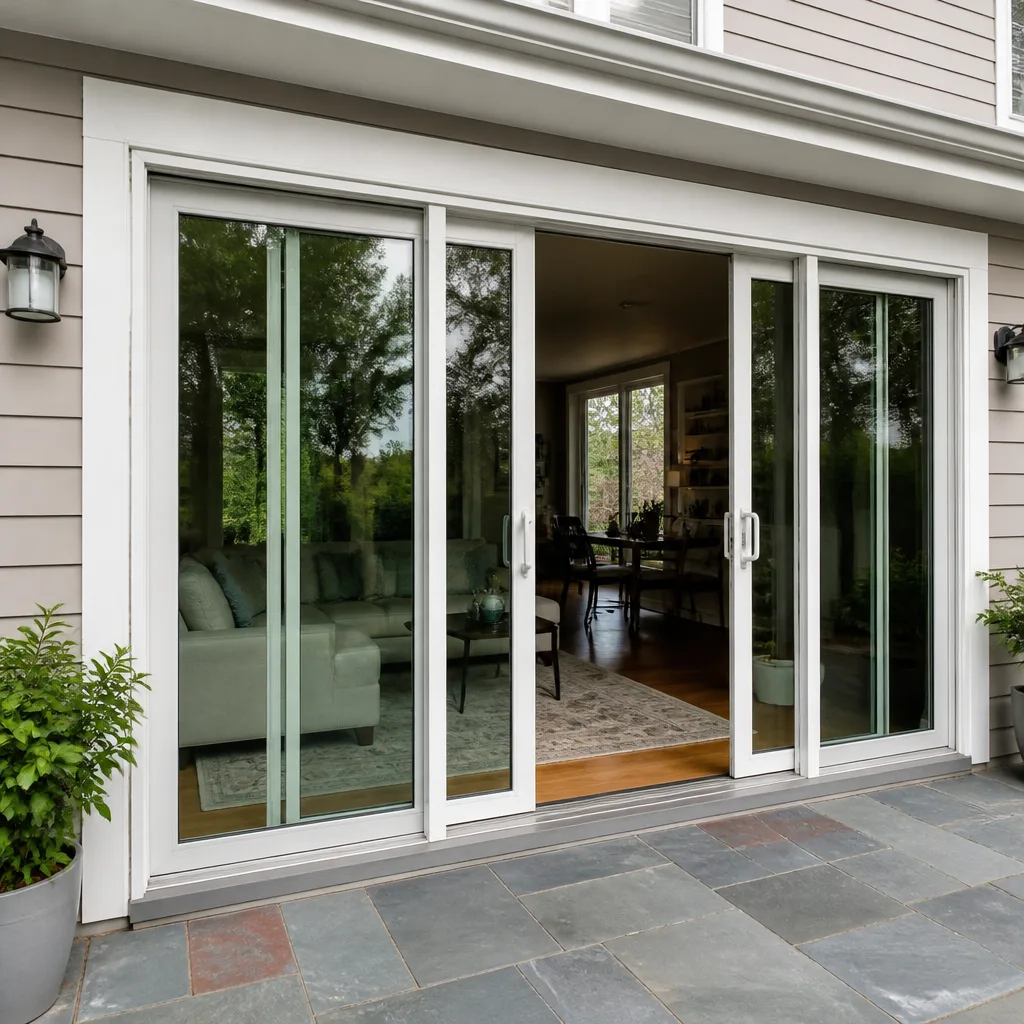
Santa Ana winds arrive between September and February, with peak gusts in the passes and canyons reaching 70 to 90 mph. Those winds convert unsecured windows and patio doors into debris paths. A typical patio door installation in Los Angeles faces the most exposure because sliders and French doors present large glass areas perpendicular to wind gusts in canyon runs.
Keep these items on hand before wind season, not after the forecast says “red flag warning”:
- Heavy-duty window film (security film). Applied to the interior face of your largest windows, security film keeps glass shards in place if a branch or flying debris hits. It will not stop a two-by-four at 80 mph, but it converts a catastrophic glass burst into a cracked pane you can manage.
- Pre-cut plywood panels. Measure your largest windows and patio door glass now, not in a blackout. Cut half-inch CDX plywood to overlap each opening by 3 inches on every side. Label each panel with the window it covers and store the panels flat, off the ground, in a garage or storage area.
- Anchor hardware. Plywood panels are useless without screws. Stock 2-inch #8 wood screws and washers sufficient to anchor every pre-cut panel. Drill anchor holes in the panels now so installation in high wind takes minutes per window.
- Roll of clear poly sheeting (6-mil minimum). If a window breaks and you cannot reach us or another contractor that day, poly sheeting over the opening keeps wind-driven rain and debris out until repairs happen.
- Duct tape or better, exterior-grade tape. Duct tape fails on stucco in high heat. Exterior painter’s tape or, better, a roll of Tyvek or flashing tape, holds poly sheeting in place on rough surfaces.
- A charged drill and charged spare battery. Every Santa Ana kit assumes power loss. Without a drill, your anchors and screws are dead weight.
Hardware stores in Los Angeles empty quickly once the National Weather Service issues a high wind watch. In the week after the 2025 wind events, common plywood sizes sold out from Glendale to Van Nuys within 48 hours. Buying materials now, at normal prices, and staging them in your garage is the difference between three hours of preparation and three days of waiting.
Insurance Documentation Before the Repair Crew Shows Up
The biggest insurance mistake Los Angeles homeowners make after any window or door emergency is moving too fast. The damage feels urgent, so they tear out broken glass, pull off the bent frame, and call the repair crew before photographing anything. Then the claim gets reduced because the adjuster cannot verify the loss.
Follow this sequence before you dispose of anything or call for repairs:
- Photograph every damaged unit with a measurement reference in frame. A tape measure held against the crack, the gap, or the frame distortion proves scale. Use a pen or business card as a secondary reference in close-ups. Take at least one wide shot showing the unit in context of the room or wall.
- Video a slow walkthrough. Narrate what you are seeing. State the date, the event that caused the damage, the room, and the unit. Pan slowly. Adjusters and the carrier’s claims system both accept video as contemporaneous evidence.
- Get a written damage assessment before any repair work begins. A reputable Los Angeles window and door company provides written documentation of what failed, the likely cause, the needed repair or replacement, and the cost. This is the estimate you submit with the claim. Meridian Windows & Doors provides a written price before any work starts, and we document the failure thoroughly because we know the adjuster will ask.
- Know your coverage type: ACV versus replacement cost. Actual Cash Value (ACV) covers the depreciated value of your window or door at the time of loss. Replacement Cost Value (RCV) covers what a new unit costs, minus your deductible. If your policy is ACV on a 15-year-old window, expect roughly $150 toward that replacement; if it is RCV, expect $600 to $900 for a standard unit, often more for WUI-rated glazing. The difference determines your out-of-pocket cost.
- Do not authorize permanent repairs until your adjuster responds. Emergency mitigation (boarding up, tarping, poly sheeting) is allowed and expected. Permanent replacement before the adjuster documents the loss can void the claim. Board first, document, then replace.
Vetting Emergency Repair Contractors in the 72 Hours After a Disaster
The 72 hours after any Los Angeles disaster event, whether fire, quake, or wind, brings out unlicensed operators who know distressed homeowners are making fast decisions. Here is how to vet anyone before they touch your home.
Step 1: Verify the license on the CSLB website
The Contractors State License Board (CSLB) runs a free license lookup at cslb.ca.gov. Type in the company name or the individual’s name. Confirm the license is “Active” and that the classification matches the work. Window and door installation falls under C-17 Glazing or B General Building. If the person at your door cannot produce a CSLB license number that checks out as active, do not let them touch the job.
Step 2: Confirm the legal deposit limit
California Business and Professions Code sets the maximum down payment for home improvement work at 10% of the total contract price or $1,000, whichever is less. Any contractor asking for more than that upfront is violating state law. No exceptions. No “materials deposit” workaround. This single rule saves Los Angeles homeowners more money each disaster season than any other.
Step 3: Require a written quote with a fixed price
Post-disaster pricing pressure is real, but a legitimate contractor still quotes a written price before work starts. That price should itemize materials, labor, and any disposal fees. Meridian Windows & Doors puts the price on paper before any work begins, and it does not change at the door. We will not ask for more than the legal deposit, and we will never ask for a cash payment to “hold your spot.”
Step 4: Ask about the guarantee in writing
If a contractor cannot state their workmanship warranty in writing, walk away. Ours is the 365-Day Done Right Promise: every installation and repair is covered for a full year, and if it fails within that period, we return at no charge. That is printed on the contract, not spoken over the phone.
Step 5: Check who answers the phone
Call the number. If you get a voicemail loop during business hours after a disaster, that is your answer about how the company handles emergencies. Meridian Windows & Doors has a live person answering calls 24 hours a day, seven days a week. No voicemail labyrinths, no next-business-day callbacks.
Understanding Fire-Rated and WUI-Rated Glazing Options
The glazing market has shifted dramatically since Los Angeles adopted Chapter 7A enforcement in WUI zones. Most homeowners walk into the decision with a basic question: what is the difference between tempered, fire-rated, and WUI-rated glass, and which do I need? Our guide to Choosing the Right Windows & Doors Brand: A Buyer’s Guide for Los Angeles can help you evaluate your options.
- Tempered glass. Heat-treated during manufacturing so it breaks into small cubes rather than large shards. Roughly four times the thermal stress resistance of annealed glass. Required by Chapter 7A in WUI zones for exterior windows. This is the baseline for any window installation in Los Angeles foothill communities.
- Fire-rated glass. Classified by minutes of fire resistance (20, 45, 60, 90). Built to block flame and limit heat transfer for a rated period, not just survive ember impact. Used for doors in fire-rated wall assemblies and in some commercial applications. Overkill for most single-family homes outside formal defensible-space zones, but required in some hillside construction where the house sits close to the property line.
- WUI-rated glazing. Meets the specific requirements of California Building Code Chapter 7A: tempered exterior lites, approved frame materials, and ember-resistant joining of multi-pane assemblies. This is the practical standard for residential replacement in high-fire-risk Los Angeles neighborhoods.
There is another option most guides do not discuss: non-combustible frame materials. Vinyl frames melt at around 400°F. Aluminum frames conduct heat directly into the glazing edge. Composite and fiberglass frames hold up longer in ember exposure. If you are replacing windows in a canyon or foothill home anyway, the frame material choice matters as much as the glass. Lines like Mr-Glass and ViewLux offer WUI-compliant assemblies that pair tempered glazing with frames engineered for ember exposure, and our team specifies from eight manufacturer lines based on the site, not on what is sitting in a warehouse.
Common Mistakes to Avoid
- Forcing a jammed door after an earthquake. As covered above, this masks structural racking and courts more damage. Document first, assess second, act third.
- Relying on window screens for ember protection. Insect screen mesh passes embers. One-sixteenth-inch metal mesh in a permanent frame is the standard, and nothing thinner works.
- Skipping the pre-event photos. Insurance claims move faster when you can show the window or door before the event. Photograph every exterior opening once a year, and store the images off-site or in cloud storage.
- Accepting a verbal quote after a disaster. Verbal quotes are not quotes. If it is not in writing, it did not happen.
- Paying more than the legal deposit. The 10% or $1,000 rule applies even in emergencies. Any contractor who pushes past it is breaking California law and telling you who they are.
- Trying to replace fire-rated glass with standard dual-pane units. If your home was built with fire-rated or WUI-rated glazing, replacing it with cheaper non-rated units violates code and voids your insurance protection for that opening. Match what the structure requires.
- Storing Santa Ana kit materials after the first wind event. The second wind event comes. Leave the plywood, screws, film, and poly in place from November through February, not just for the red-flag day.
When to Call a Professional
Call a licensed window and door contractor when a door will not operate after an earthquake and the gap pattern suggests frame racking. Call when ember intrusion has charred a frame or cracked glazing, since hidden frame damage often spans beyond the visible burn. Call when a Santa Ana wind event has pulled a patio door out of square or shattered a tempered unit. Call before you replace any window in a WUI zone, because the code requirements are specific and a wrong replacement creates liability. Meridian Windows & Doors offers free estimates across Los Angeles at Meridian Windows & Doors home. Call (817) 686-2228 and a live person answers, day or night.
Frequently Asked Questions
A standard tempered dual-pane replacement window in Los Angeles typically runs $600 to $1,400 installed, depending on size, frame material, and WUI rating requirements. A single cracked pane replacement runs $200 to $450 when the frame is sound. Fire-rated or Chapter 7A-compliant units run higher: $900 to $2,200 per opening in most cases. Call (817) 686-2228 for a written line-item quote, which is the only way to get an exact number for your specific openings.
No, standard homeowners insurance does not cover earthquake damage to windows or doors in Los Angeles. Earthquake coverage is a separate policy or endorsement, typically sold through the California Earthquake Authority or a private carrier. Wildfire and wind damage are covered under standard policies, subject to your deductible. Confirm your policy type before the event, not after.
Homes in Los Angeles Wildland-Urban Interface zones must have tempered glass in exterior windows, and doors in fire-rated walls require fire-rated glass with a minimum rating per the building code. The exact requirement depends on your zone and construction type. LAFD’s brush clearance office or a licensed glazing contractor can confirm your home’s specific mandate.
A racked frame shows a wedge-shaped gap between the door and the frame: wide at the top and tight at the bottom on the latch side, or the reverse. The door binds at the top or latch rather than just at the threshold. If you see this pattern, do not force the door. Document it and call a licensed contractor for an assessment before any repair.
Yes, temporary boarding is standard homeowner mitigation and does not require a permit in Los Angeles. Use half-inch CDX plywood overlapping each opening by three inches per side, anchored with 2-inch #8 wood screws and washers. Permanent replacement requires a permit when the opening is in a WUI zone or when structural frame work is involved. Meridian Windows & Doors handles the permanent work and the permit process.
The fastest legal route is to call a glazing contractor with live phone coverage and emergency response capacity. Meridian Windows & Doors answers calls live 24/7 at (817) 686-2228 and schedules emergency mitigation for Los Angeles homeowners every day of the year. Do not call a handyman who lacks a CSLB license; the temporary work they do may not hold, and the permanent work they promise is illegal to perform without a license.
The Bottom Line
Los Angeles homes face three distinct window and door emergencies: earthquake racking, wildfire ember intrusion, and Santa Ana wind failure. Each has a different failure mechanism, a different immediate response, and a different hardening strategy before the event. The recurring themes: document before you repair, confirm the license and the written guarantee before you pay, and do not force anything that failed structurally. A meridian is a fixed line you measure everything against. That is what the name means and how we run every install. Preparation is the difference between a three-hour inconvenience and a three-week claim. If we can help, call (817) 686-2228 and we will put the price on paper before any work starts.
Written by Elliot Vance, Owner at Meridian Windows & Doors, serving Los Angeles since 2009.