

Last updated October 9, 2026
Free in-home measure and quote - PGT, CGI and CWS impact lines compared on your actual openings, style by style
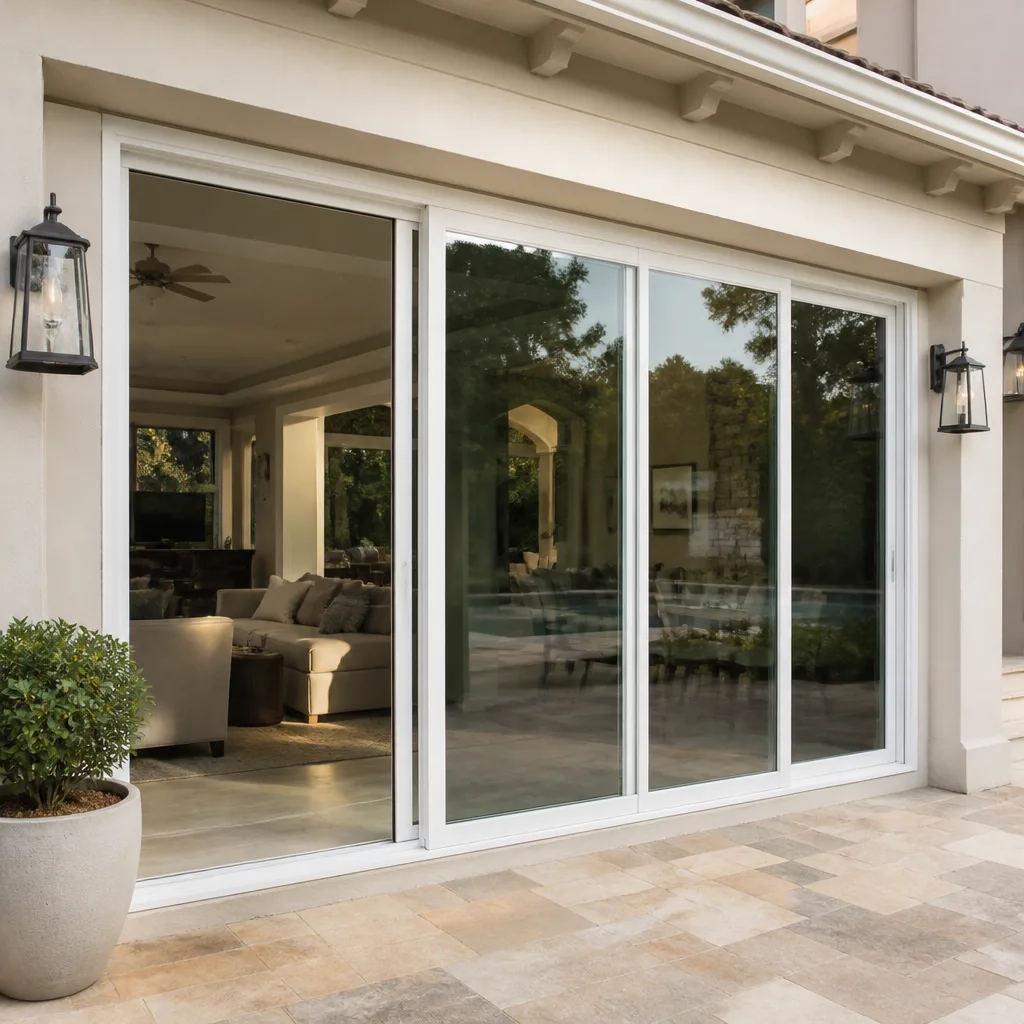
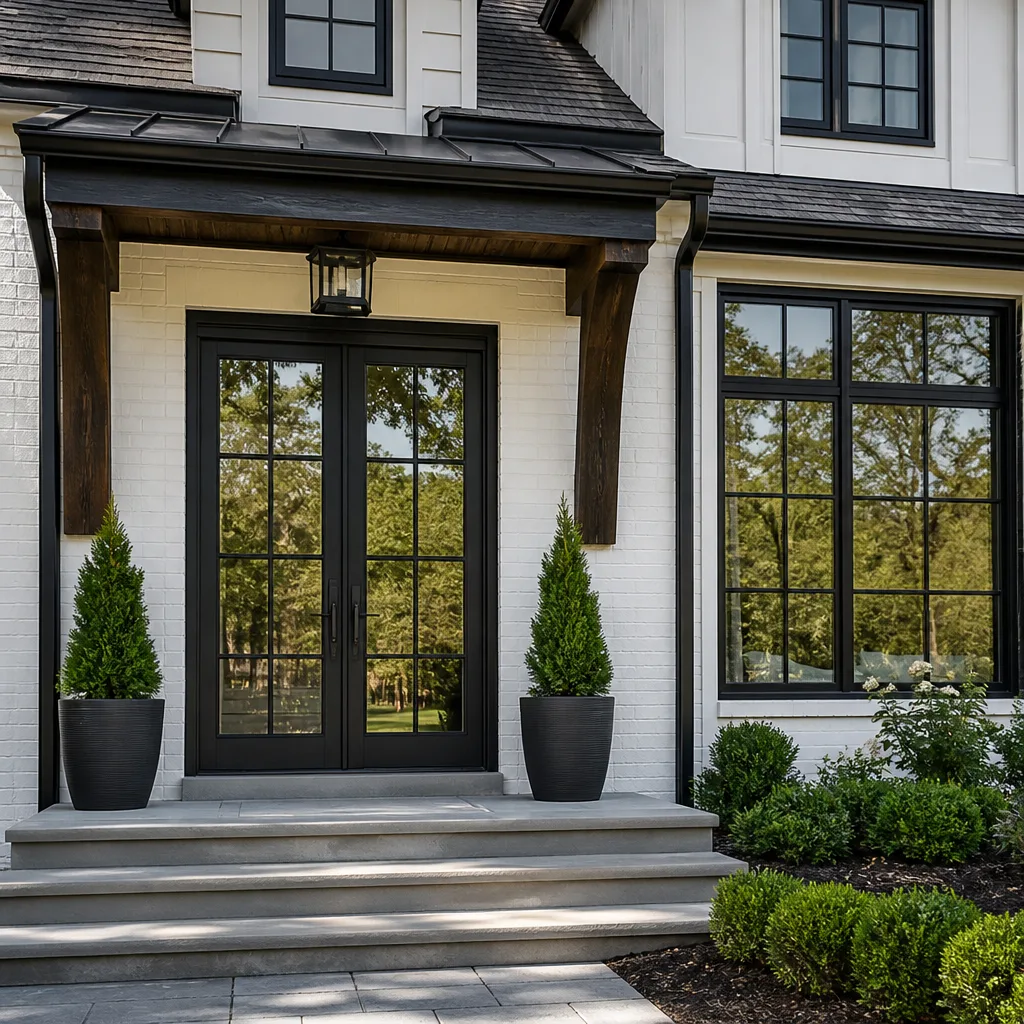
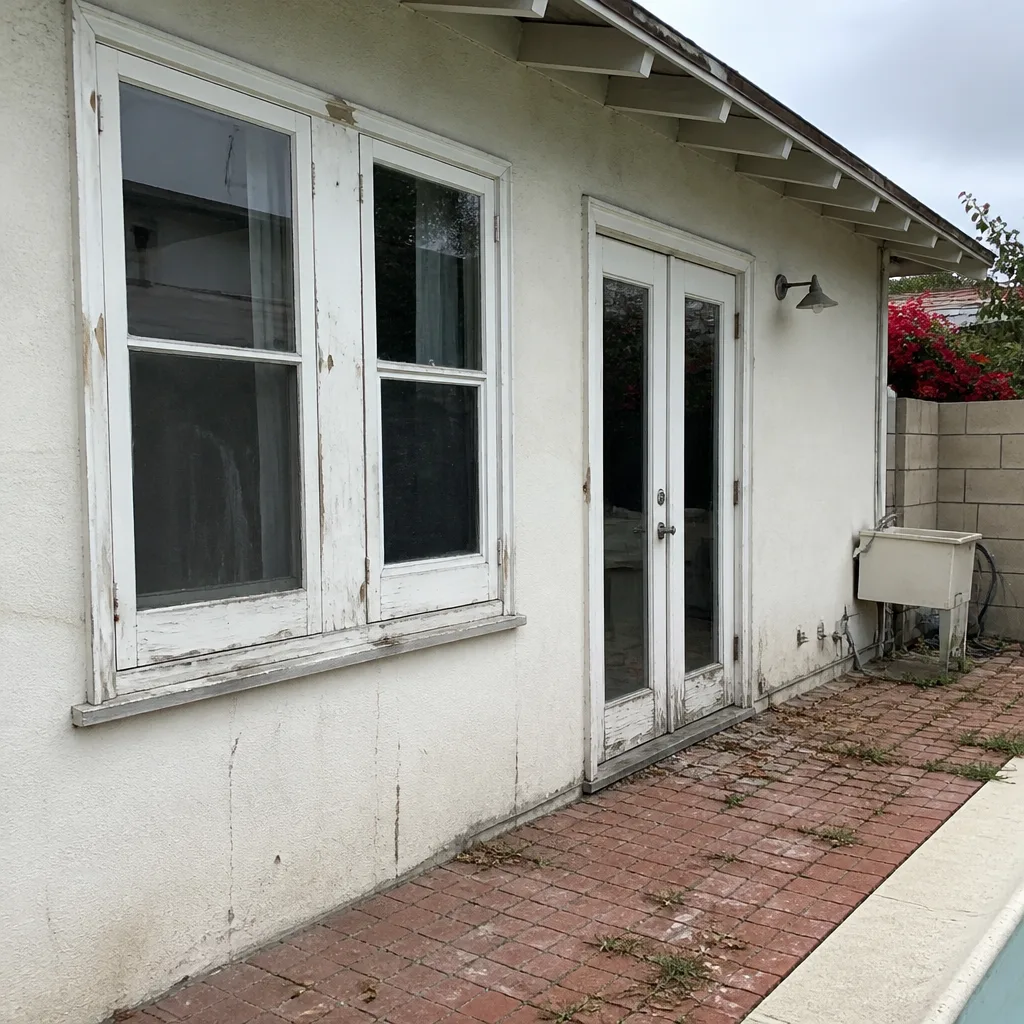 Before
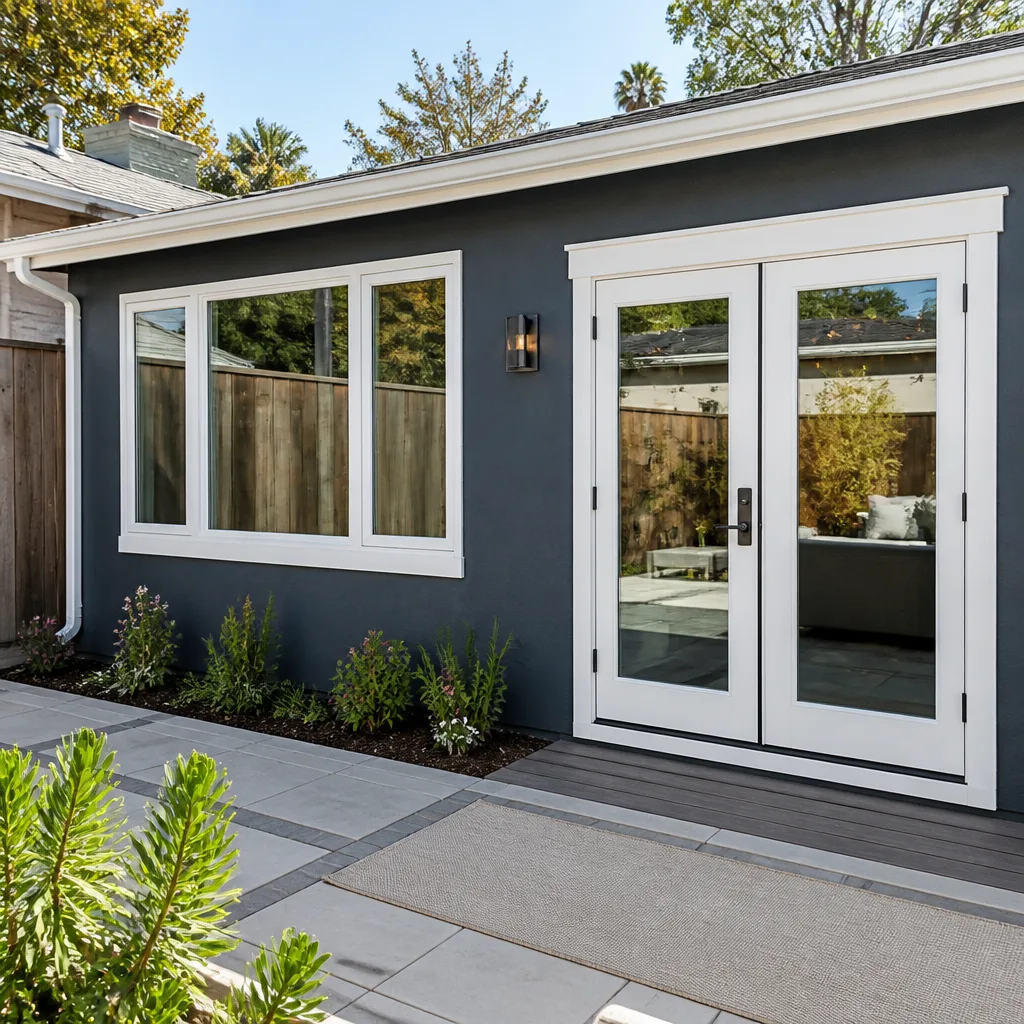 After
After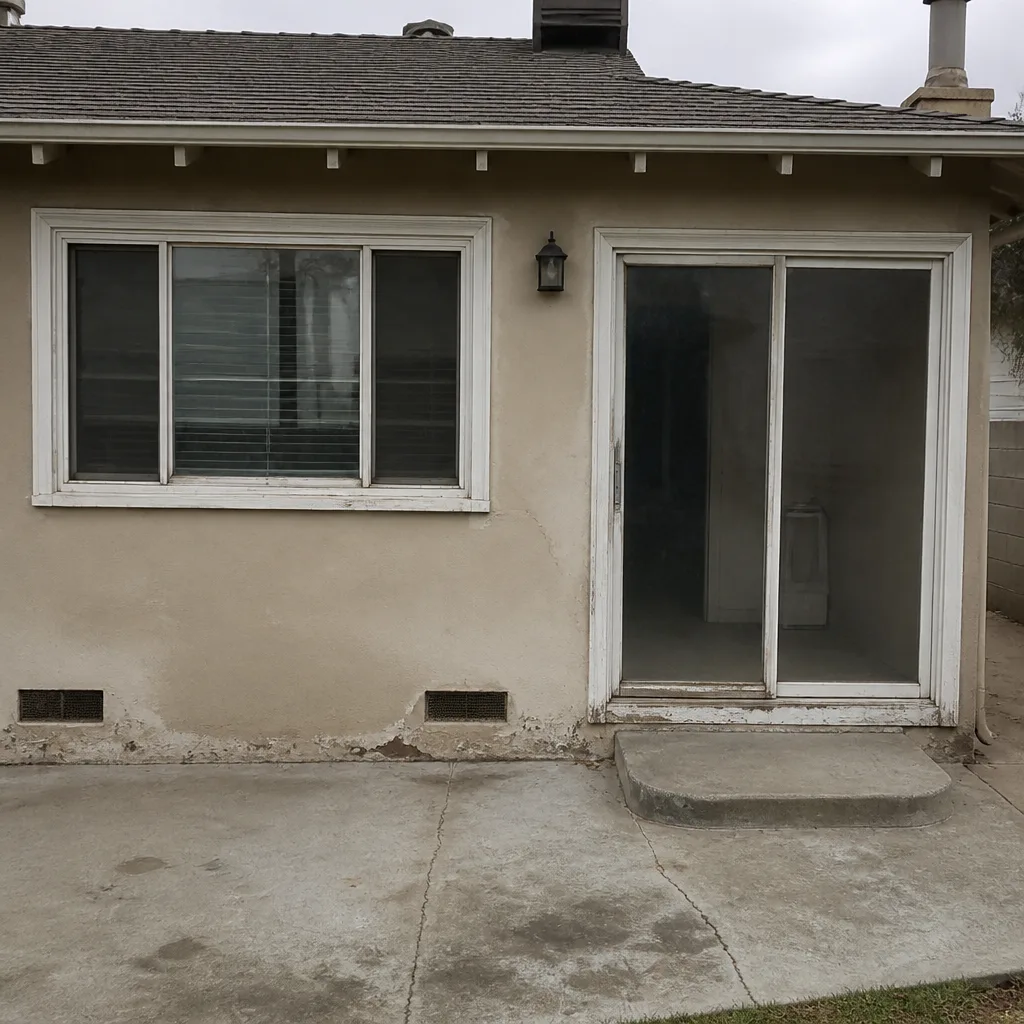 Before
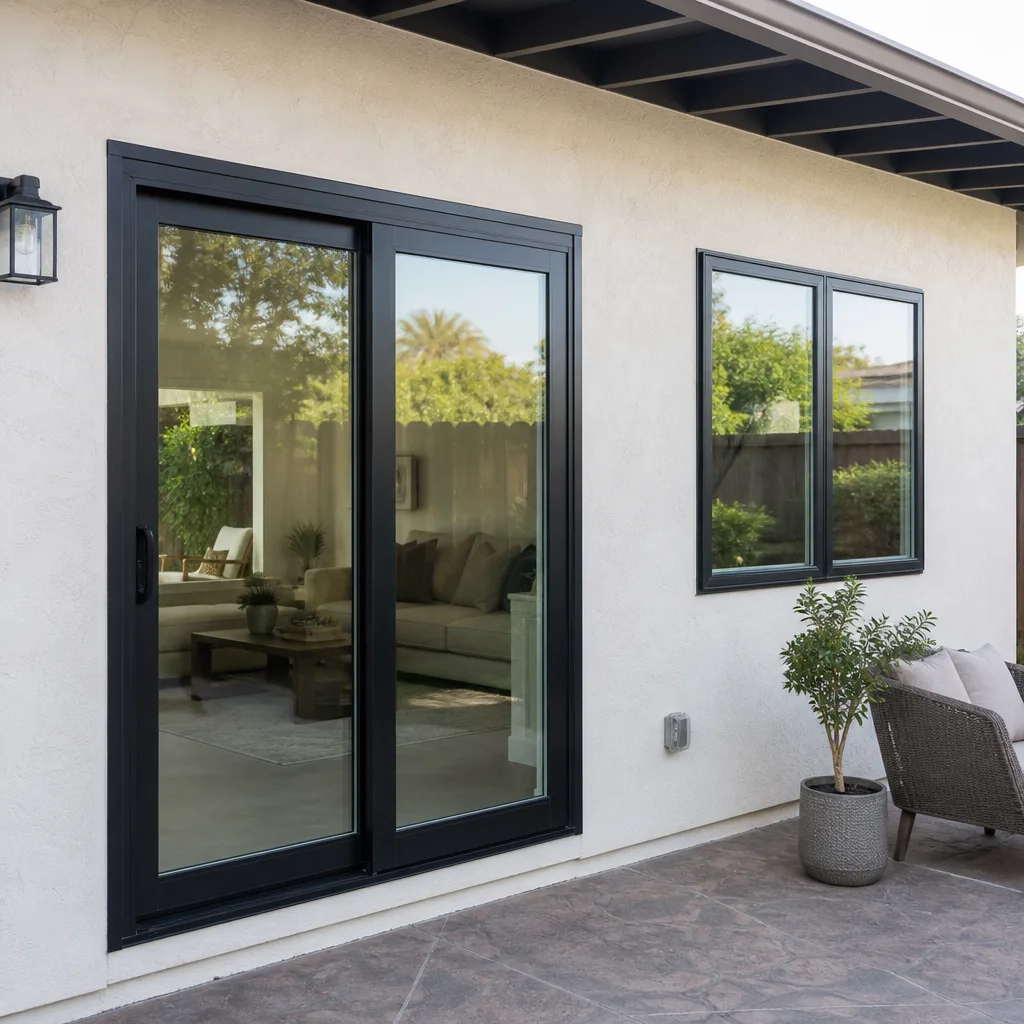 After
After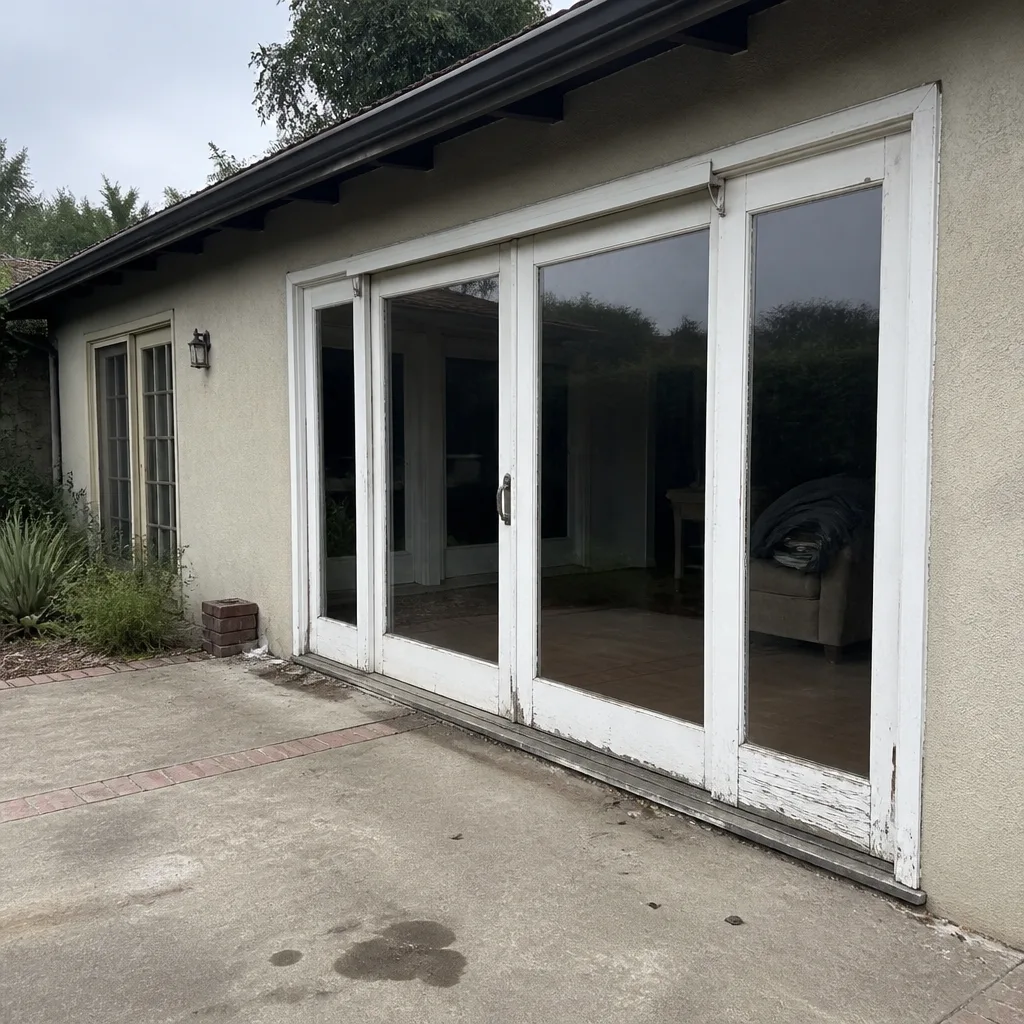 Before
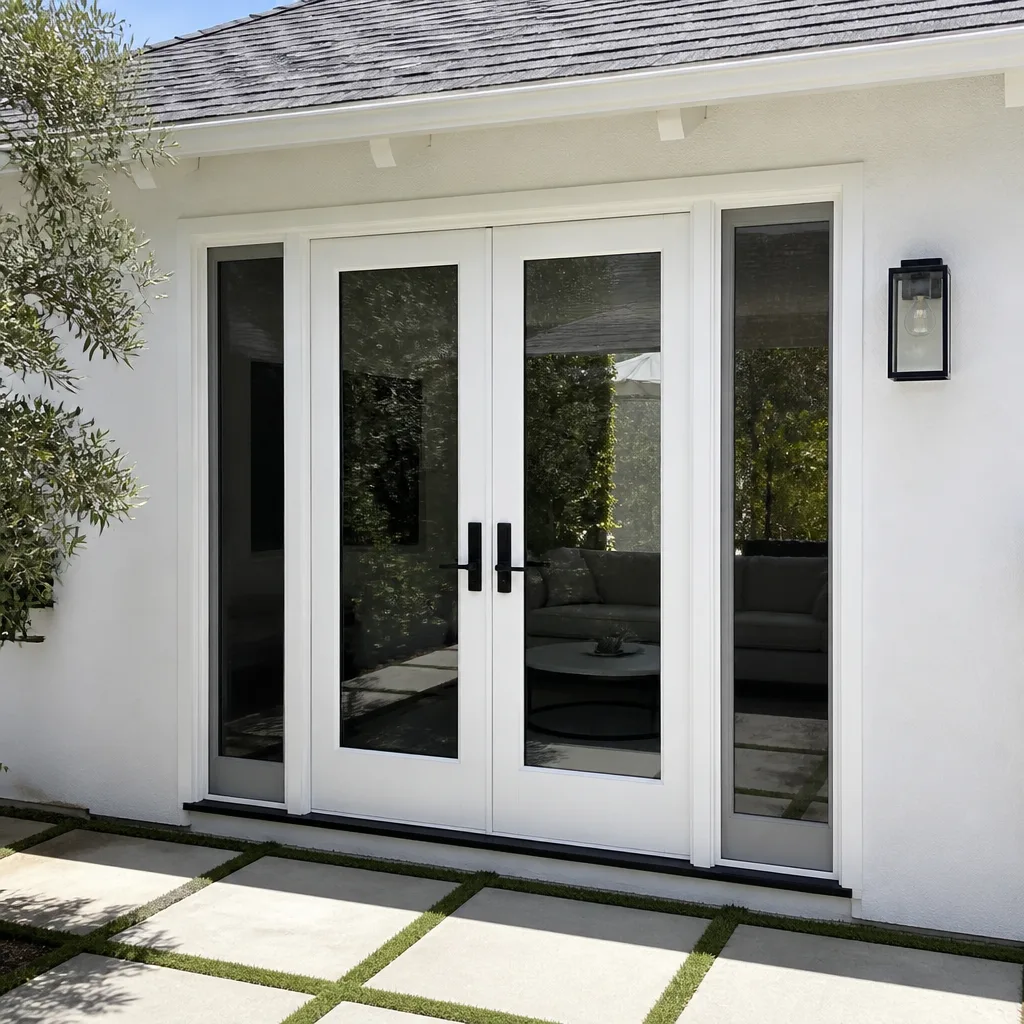 After
AfterPatio Door Installation Troubleshooting: Common Problems and How to Fix Them
A sliding patio door that requires more than 30 pounds of force to open fails the ADA operational standard, and almost always traces back to one of three adjustable components most homeowners never know exist. We’ve torn out doors in Los Angeles that were replaced unnecessarily when a $12 roller pair and a 4mm Allen key would have solved the problem in 20 minutes. This guide diagnoses the seven most common patio door failures, tells you what each fix actually costs, and draws the line clearly between what you can handle and what belongs to our Patio Door Installation services team.
Quick Answer
Most patio door problems are mechanical failures with known, fixable causes, not reasons to replace the door. Hard sliding is usually worn rollers or a dirty bottom track ($15 – $90 in parts), air leaks at the meeting stile are typically a failed weatherstrip or minor frame misalignment ($40 – $300), and a latch that won’t catch is generally a keeper-strike alignment issue caused by seasonal movement. Before calling anyone, check these three things: roller adjustment screws, track condition, and the alignment of the latch keeper. For Patio Door Installation Warning Signs Every Homeowner Should Know, see our detailed breakdown.
Table of Contents
- Roller and Track Diagnosis: Testing Resistance and Finding the Adjustment Screws
- Air and Water Infiltration at the Meeting Stile
- Latch and Lock Failures: The Keeper-Strike Misalignment Problem
- Condensation: Interior Glass vs. Between Panes
- Frame Alignment and Seasonal Movement in Los Angeles
- Noisy Operation: Grinding, Squealing, and What Each Sound Means
- What to Have Ready Before You Call a Technician
- Common Mistakes to Avoid
- When to Call a Professional
- Frequently Asked Questions
- The Bottom Line
Roller and Track Diagnosis: Testing Resistance and Finding the Adjustment Screws
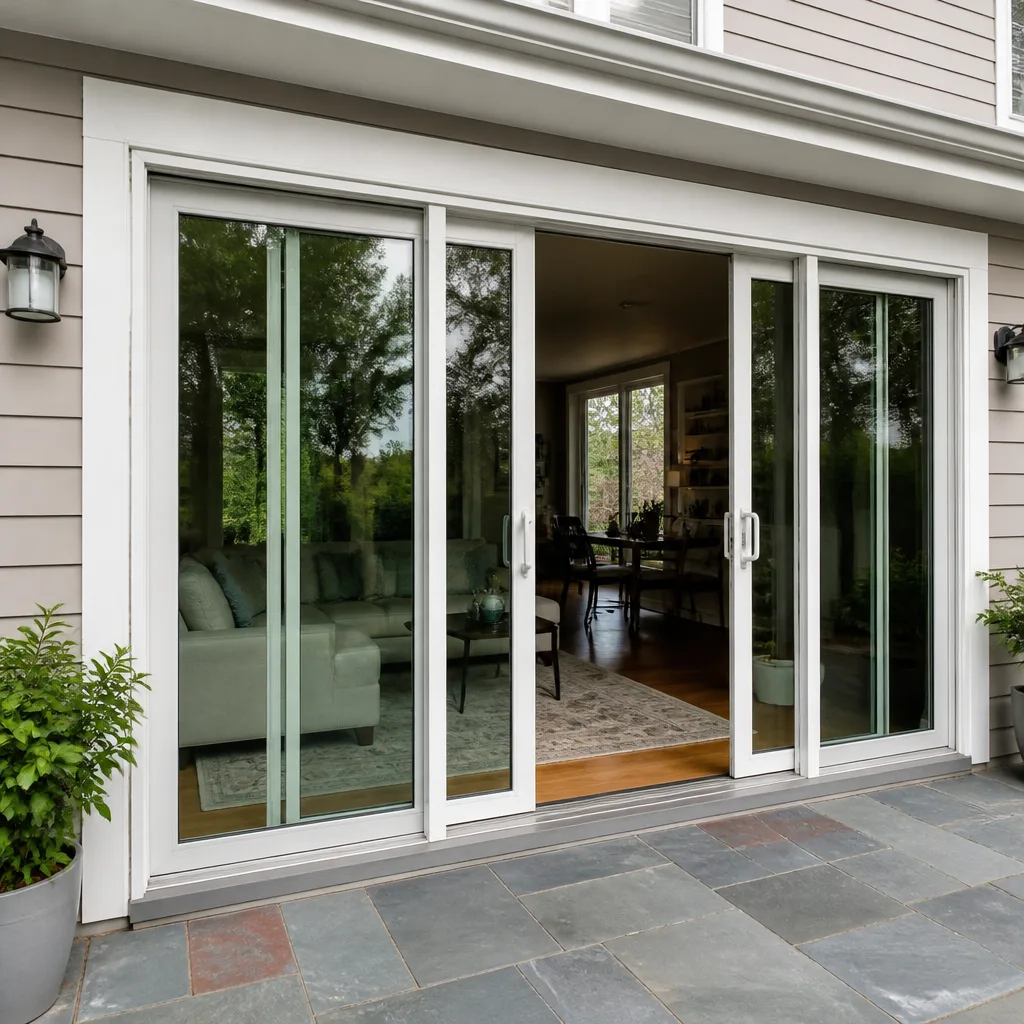
A properly functioning patio door should glide with 10 to 15 pounds of horizontal force, roughly the effort of lifting a gallon of paint. You can test this yourself with a luggage scale: hook it to the handle, pull slowly, and watch the reading. Anything above 30 pounds means something is wrong. In our Los Angeles service area, we consistently see doors reading 40 to 60 pounds, and the cause is almost always one of three things: debris-caked tracks, rollers that have never been adjusted, or rollers worn flat from years of grit.
Every sliding patio door has roller adjustment screws, but the locations vary by brand:
- PGT doors: adjustment screws sit behind small plastic caps on the bottom face of the door panel, near each corner.
- CGI doors: screws are accessible through notches in the bottom frame edge; you may need a right-angle screwdriver.
- Therma-Tru sliding doors: the adjustment point is on the interior bottom rail, usually behind a snap-in cover.
- ES Windows: rollers adjust from the top of the bottom rail through two recessed holes with protective grommets.
- Andersen and Milgard (common in LA retrofits): screws on the interior face of the bottom rail, one per roller, typically Phillips or flathead.
Here is the diagnostic sequence we run on every service call:
- Lift the panel slightly. If you can raise the door a quarter inch without much effort, the rollers are bottoming out or the adjustment is too low, causing the door to drag on the track.
- Inspect the track with a flashlight. Look for black rubber streaks or flat spots. Those are roller material, which means the wheel has stopped spinning and is scraping.
- Turn one adjustment screw a half turn clockwise. If the door rises a visible amount, the roller assembly is functioning and the problem is adjustment, not replacement.
- Spin the roller by hand if accessible. A wheel that spins freely but wobbles on its axle is worn past adjustment and needs replacement.
A roller pair for most brands runs $15 to $40. If the bottom track is bent or scored, a replacement track section is $30 to $80, but installation requires lifting the door out, which is a two-person job. This is also where we see homeowners in neighborhoods like Sherman Oaks and Pasadena get quoted full door replacements when the real fix was a $25 roller set. The door slab was fine. The hardware was finished.
Air and Water Infiltration at the Meeting Stile
The meeting stile is where the two panels of a sliding patio door come together in the middle, and it is the most common leak point on any door, especially in Los Angeles where winter rains hit hard and fast against west-facing doors. The test is simple: on a windy day, light a stick of incense and move it slowly along the seam where the panels meet. If the smoke stream bends inward, you have an air path. If it bends and the door is wet or staining below the seam after rain, you also have a water intrusion path.
The cause breaks into three possibilities, listed from cheapest to most expensive:
- Worn or compressed weatherstrip. The pile brush or rubber fin seal that runs vertically along the meeting stile loses its loft after a few seasons of sun and compression. Replacement weatherstrip costs $20 to $60 per door and installs without removing the panel on most brands, including PGT and CGI doors.
- Interlock misalignment. Most modern patio doors have raised interlocking rails on the meeting stiles that hook together when closed. If one panel sits slightly higher than the other, the interlock does not seat fully, leaving a hairline gap. This is usually corrected with the same roller adjustment screws mentioned above, raising the lower panel until the interlocks meet flush.
- Frame racking or improper shimming. If the door frame was installed out of square, or if the rough opening has shifted, no weatherstrip will close the gap. This is a frame-alignment problem, not a part replacement problem. The fix typically involves removing trim, re-shimming the frame, and re-setting the panels, a $250 to $500 repair in most LA homes.
One distinction worth understanding: a weatherstrip replacement is a maintenance item, like brake pads. A frame that has moved is a structural issue, and it will recur unless the underlying cause is addressed. We have seen doors in hillside neighborhoods like Mount Washington shift seasonally because the house itself moves with wet-dry clay soil cycles, and that changes the repair approach entirely. For a deeper look at how doors are installed correctly the first time, see our Patio Door Installation in Los Angeles page.
Latch and Lock Failures: The Keeper-Strike Misalignment Problem
A door that locks but doesn’t feel right, one that only catches if you lift the handle or push the panel inward while turning, is usually a keeper-strike misalignment. The latch tongue on the door panel and the keeper on the frame are off by an eighth of an inch or less. In Los Angeles, where temperature swings and dry-to-damp cycles move wood framing in the rough opening, this is the single most common latch complaint we hear in spring and fall.
Here is what is happening: the rough opening is framed with lumber that absorbs and releases moisture seasonally. In dry months, the framing shrinks slightly, the header drops a fraction, and the strike position shifts. In damp months, it swells and shifts the other direction. A door that latched perfectly in July may drag or feel loose in February. This is normal behavior, and the fix is adjustment, not lock replacement.
- Inspect the strike slot. Look for scratch marks above or below the slot opening. These tell you which direction the latch tongue is hitting off-center.
- Loosen the keeper screws. Most keepers have 1/16 to 1/8 inch of lateral play. Slide the keeper toward the scratch marks, tighten, and test.
- File the slot if needed. If the keeper is at the limit of its adjustment, a few passes with a flat file along the binding edge of the slot restores smooth engagement without weakening the lock.
- Check the handle set screws. A floppy handle or a lock lever that spins without resistance means the internal set screw has backed out, a five-minute fix with the right Allen key.
If the keeper is bent, stripped, or the latch tongue itself is worn rounded, replacement hardware for most patio doors runs $30 to $90. The key point: do not lubricate a misaligned latch with WD-40 and call it fixed. Lubrication masks a problem that will wear the mechanism faster and leave the door vulnerable to a forced entry.
Condensation: Interior Glass vs. Between Panes
Condensation on a patio door breaks into two categories, and only one of them is your fault. Moisture on the interior surface of the glass, the side you can wipe with a finger, is a humidity problem inside the house. Condensation that appears between the two panes of an insulated glass unit is a failed seal, and that is a manufacturing defect covered under warranty by brands like PGT, CGI, and ES Windows.
Interior surface condensation in Los Angeles is most common in the morning after cool nights, especially on east-facing doors that catch the first sun. The cause is indoor humidity exceeding the dew point at the glass surface. Fixes are behavioral and mechanical:
- Run a bathroom exhaust fan during and for 20 minutes after showers.
- Check that the kitchen range hood vents outdoors, not into the attic.
- Consider a whole-house dehumidifier if indoor humidity consistently reads above 55 percent on a $15 hygrometer.
- Note whether the door has a thermal break. Non-thermal aluminum frames conduct cold from outside to the glass edge, concentrating condensation there even at moderate indoor humidity.
Condensation between panes means the desiccant inside the sealed unit is saturated and the argon or krypton fill has escaped. The only fix is glass replacement. Most major manufacturers warrant the sealed unit for 10 to 20 years, covering the glass but not the labor. If the door was installed by a company that provided a written workmanship warranty, that may cover labor for the removal and reset. Our installs carry a written 365-day guarantee on the entire job, and our Meridian Windows & Doors home page explains how that works in practice.
Frame Alignment and Seasonal Movement in Los Angeles
Los Angeles has three climate realities that stress patio door frames in ways most guides written for the Northeast or Midwest miss entirely-see our Seasonal Windows & Doors Care for Los Angeles: Year-Round Homeowner’s Guide. First, we get intense sun on south- and west-facing doors: vinyl and aluminum frames expand measurably on a 95-degree afternoon. Second, we have sharp wet-dry cycles, where months of drought are broken by heavy winter storms that swell the door’s rough opening. Third, many LA homes sit on expansive clay soil, especially in neighborhoods from Eagle Rock to Studio City, where the house itself moves a few millimeters seasonally.
The symptom pattern is predictable: a door that slides beautifully in September starts binding in January, or a meeting stile gap opens up just enough to whistle during Santa Ana winds. When a door’s performance changes with the seasons, the fix is frame-level, not hardware-level.
The right repair sequence looks like this:
- Check level and plumb on the frame with a 4-foot level. A door that is out of level by more than 1/8 inch across its width will always drift toward the low corner, no matter how well the rollers are adjusted.
- Remove the interior trim around the top and sides to expose the shim points.
- Re-shim the frame to square and level, then re-fasten through the frame into the rough opening studs.
- Re-set the panels, re-adjust the rollers, and reset the interlock gap at the meeting stile.
- Foam or caulk around the frame perimeter before replacing the trim.
This is a $250 to $600 job in most Los Angeles homes, depending on trim material and whether stucco patching is needed on the exterior. It is not a weekend project for most homeowners, but it is also not a reason to replace a door that is structurally sound. The distinction matters, because door replacement in LA runs $1,800 to $4,500 installed, and a frame realignment runs a fraction of that. Our related page on Window Replacement in Los Angeles covers similar cost logic for windows if you are evaluating the whole wall.
Noisy Operation: Grinding, Squealing, and What Each Sound Means
Patio doors speak in three distinct noises, and each one points to a different diagnosis. Grinding with every inch of travel is almost always a roller that has stopped spinning and is now dragging its flat side across the track. Squealing on movement is metal-on-metal contact where a roller axle has lost lubrication or the adjustment screw has backed out against the track. A rhythmic thump-thump-thump as the door rolls means the track has a dent, a pebble, or a flattened section from the door being dropped at some point.
Here is the diagnostic rule of thumb we use on service calls:
- Grinding = flat-spotted roller. Replace both rollers on the panel, even if only one is damaged. A mismatched pair wears unevenly and the new roller will fail early.
- Squealing = dry axle or loose hardware. Clean the roller housing, apply a dry silicone lubricant (never oil, which gums), and re-tighten the adjustment screws.
- Thumping = track damage. Locate the dent with a level, then decide whether the track section can be dressed with a file or needs replacing. A track with a visible kink is not repairable.
One note for homeowners with CGW or ES Windows doors: these brands use stainless steel ball-bearing rollers on their higher-end lines, and those rollers rarely fail from wear. When they make noise, it is almost always track contamination. Clean the bottom track with a vacuum crevice tool, then wipe with rubbing alcohol on a rag. No other cleaner is needed, and household spray cleaners leave residue that attracts grit.
What to Have Ready Before You Call a Technician
A troubleshooting phone call is worth placing before you schedule a service visit, because the right information sends a technician to your door with the right parts on the first trip. This saves you time and keeps the repair bill lower. Here is what we ask every Los Angeles homeowner to have ready:
- The door brand and, if visible, the model number. The brand is usually etched in a corner of the glass or printed on a sticker along the door edge. PGT, CGI, CWS, and ES Windows all put their marks there.
- Rough measurements of the door panel: height, width, and whether it’s a two-panel or three-panel configuration.
- A description of the symptom in operational language. ‘It takes both hands to move’ is useful. ‘It’s broken’ is not. Note whether the problem is constant or comes and goes with weather.
- A photo of the bottom track and the meeting stile seam, taken with the flash on from about two feet away.
- Installation history, if you know it. Was the door original to the house? Replaced in a remodeling project? Replaced after storm damage? This tells us what to expect in the rough opening.
Send these five things and a competent technician can often quote a firm price before rolling a truck. If the first company you call won’t look at photos or asks you to describe the problem over the phone until a dispatcher arrives, keep dialing. The right shop wants information first, and that discipline is exactly what our Window Installation in Los Angeles and patio door teams are trained to do.
Common Mistakes to Avoid
- Lubricating the door to “fix” a noise without diagnosing the noise first. Lubricant on a flat-spotted roller makes the grinding quieter for a week, then the roller wears through the track and the repair cost doubles.
- Forcing a door that resists. Pushing harder on a door that is binding bends the frame, pulls the roller adjustment screws out of their threads, and turns a $40 part replacement into a frame realignment.
- Assuming a fogged glass panel means the whole door needs replacing. The glass unit is replaceable independently of the door frame on almost every brand we install, including PGT and CGI.
- Waiting until after the first winter storm to address a meeting stile leak. In Los Angeles, water intrusion at the interlock is most obvious during heavy rain, which is also when every contractor’s schedule is fullest. Test on a dry windy day instead.
- Tightening adjustment screws to their maximum travel. This puts the door out of level at the top, wrecks the interlock alignment, and can strip the nylon adjustment nut inside the roller housing.
- Replacing rollers on one panel only. Rollers wear as a set. Replacing one side leaves the door slightly uneven at the bottom, and the old roller on the other side fails within a year.
- Ignoring a door that rattles during Santa Ana winds. That rattle means the interlock at the meeting stile is no longer seated. The same gap that rattles will leak when the first real rain arrives.
When to Call a Professional
If the door has shifted out of square at the frame, if the glass seal has failed, or if the track is bent, this is not a homeowner-level repair, and the cost of getting it wrong is a door that leaks, binds, or fails to lock. Meridian Windows & Doors offers free estimates in Los Angeles, and every diagnosis is followed by a written price before work begins, so you know exactly what the repair costs and what it covers. Call (817) 686-2228 to schedule a service visit.
Frequently Asked Questions
Roller replacement parts run $15 to $40 per pair for most brands, and labor to remove the panel, swap the rollers, and reset the door typically brings the total to $120 to $250 in most Los Angeles neighborhoods. The price varies depending on door weight, brand, and whether the old rollers have damaged the track, but you should not need to replace the door for a roller failure. Call (817) 686-2228 for an exact quote after a quick phone diagnosis.
Most patio door leaks can be repaired. The leak is usually at the meeting stile weatherstrip, the interlock alignment, or a frame that has shifted out of square, and the fix runs $40 to $600 depending on the cause. Replacement is only necessary when the frame itself is rotted, severely racked, or the glass has failed and the door is beyond warranty.
In Los Angeles, the lumber in the rough opening swells when humidity rises after rain, which shifts the door frame slightly and changes the roller alignment and latch strike position. This is seasonal behavior, not a door failure, and the fix is a roller adjustment and possibly a keeper-strike realignment rather than a replacement.
Condensation between the panes means the sealed glass unit has failed: the desiccant inside is saturated and the insulating gas fill has leaked out. This is a manufacturing defect covered by most major brand warranties, including PGT and CGI, and the glass unit is replaceable without replacing the entire door.
Measure the diagonal distances from opposite corners of the door frame. If the two diagonals differ by more than 1/4 inch, the frame is out of square. You can also place a 4-foot level on the bottom track; a bubble that sits more than 1/8 inch off center confirms the frame is out of level, which is why the door drifts or binds.
We repair and replace patio doors across Los Angeles, drawing from eight manufacturer lines so the replacement part or door matches the job. Every repair gets a written price before work starts and is covered by our 365-Day Done Right Promise. Call (817) 686-2228 for a free estimate.
The Bottom Line
Patio doors fail in predictable patterns, and most of those failures are mechanical, fixable, and far cheaper than replacement. Hard sliding is usually rollers or track debris. Air and water leaks are usually weatherstrip or interlock alignment. Latching problems are usually keeper-strike movement from seasonal framing shifts. Condensation between panes is a sealed unit failure covered by warranty. The discipline is in testing the right component before buying a part, and in knowing the line between a maintenance repair and a structural correction. Run the tests in this guide, and you will know which side of that line your door is on. For more guides & resources, explore our blog.
Written by Elliot Vance, Owner at Meridian Windows & Doors, serving Los Angeles since 2009.