
Last updated October 9, 2026
Free in-home measure and quote - PGT, CGI and CWS impact lines compared on your actual openings, style by style
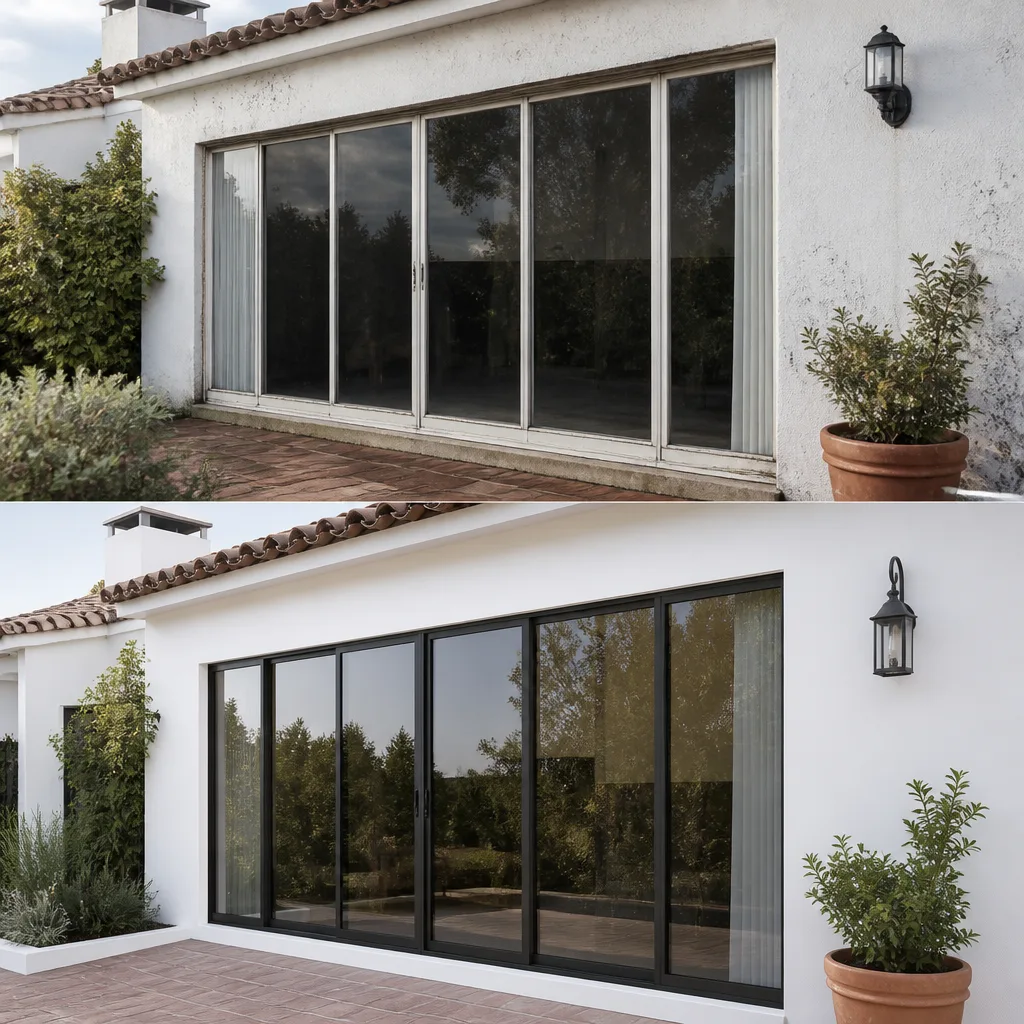
 Before
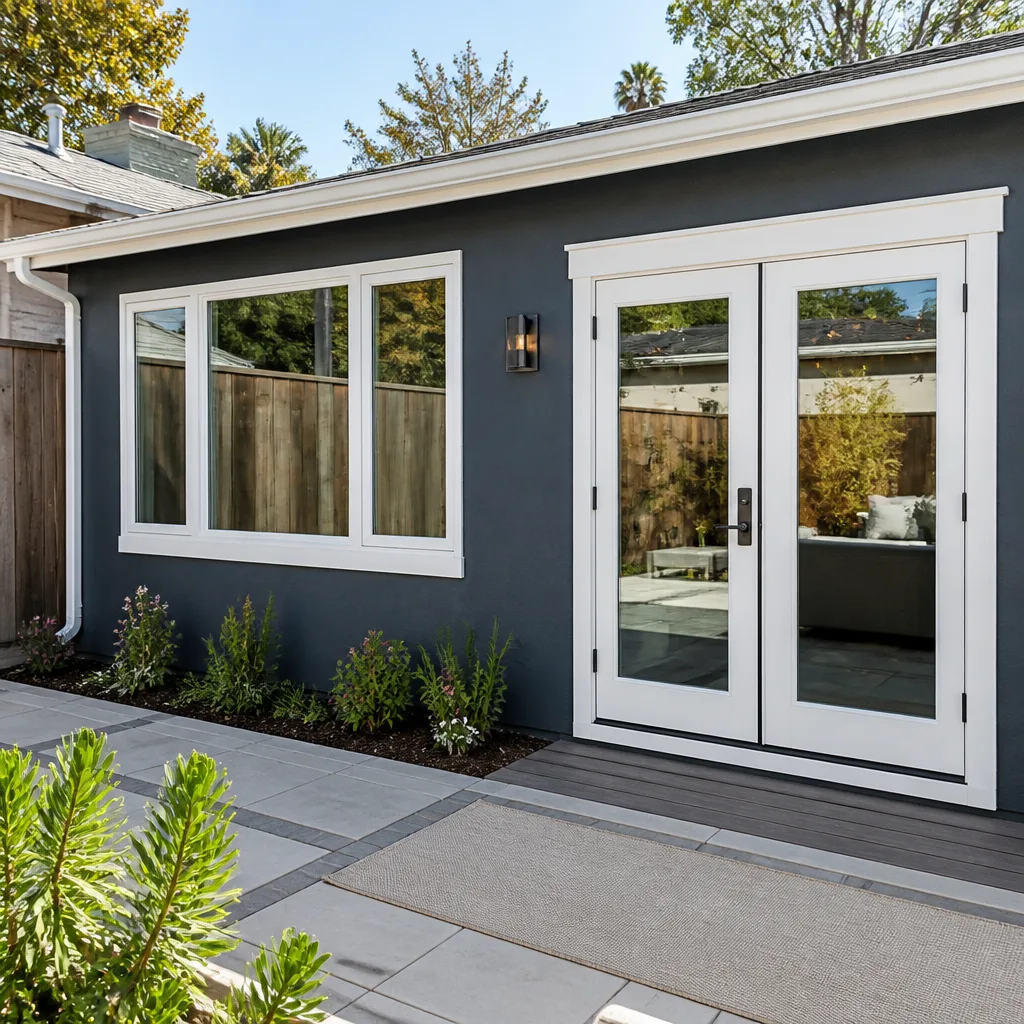 After
After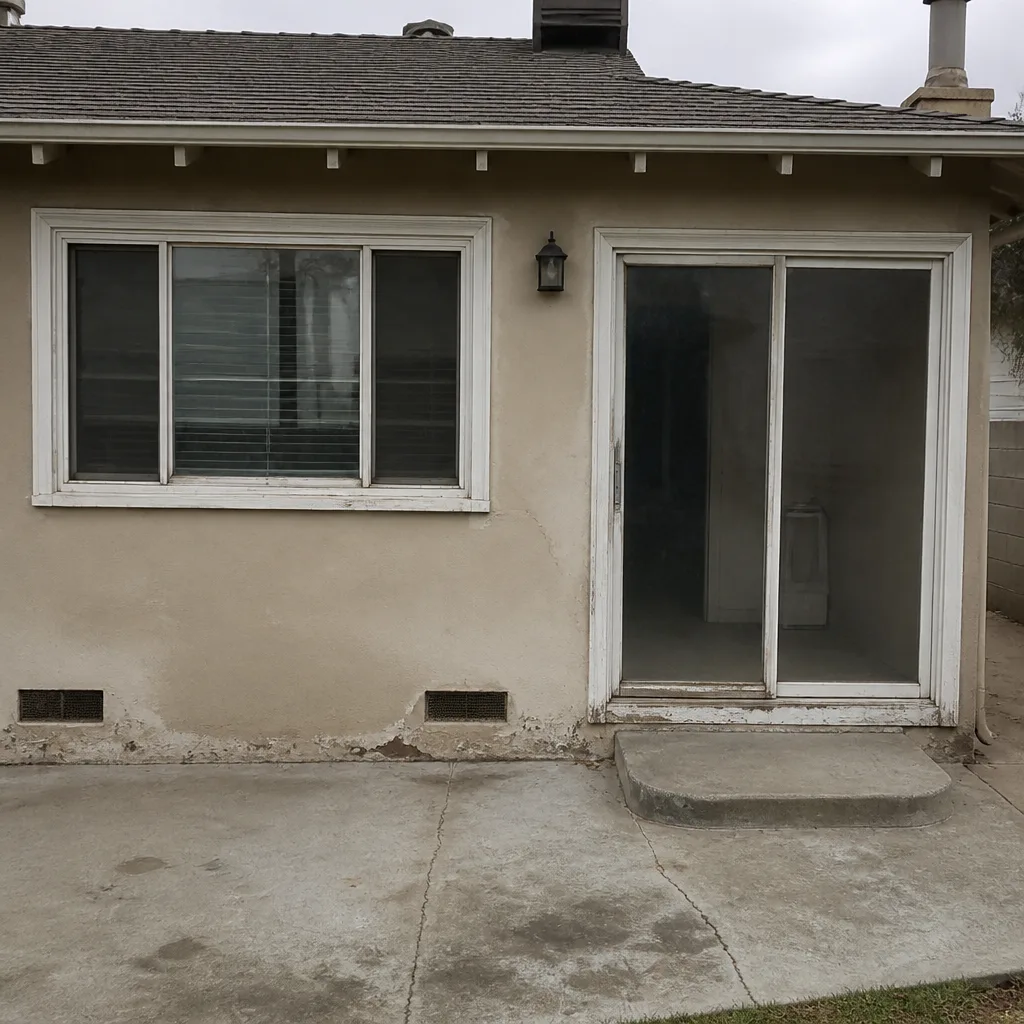 Before
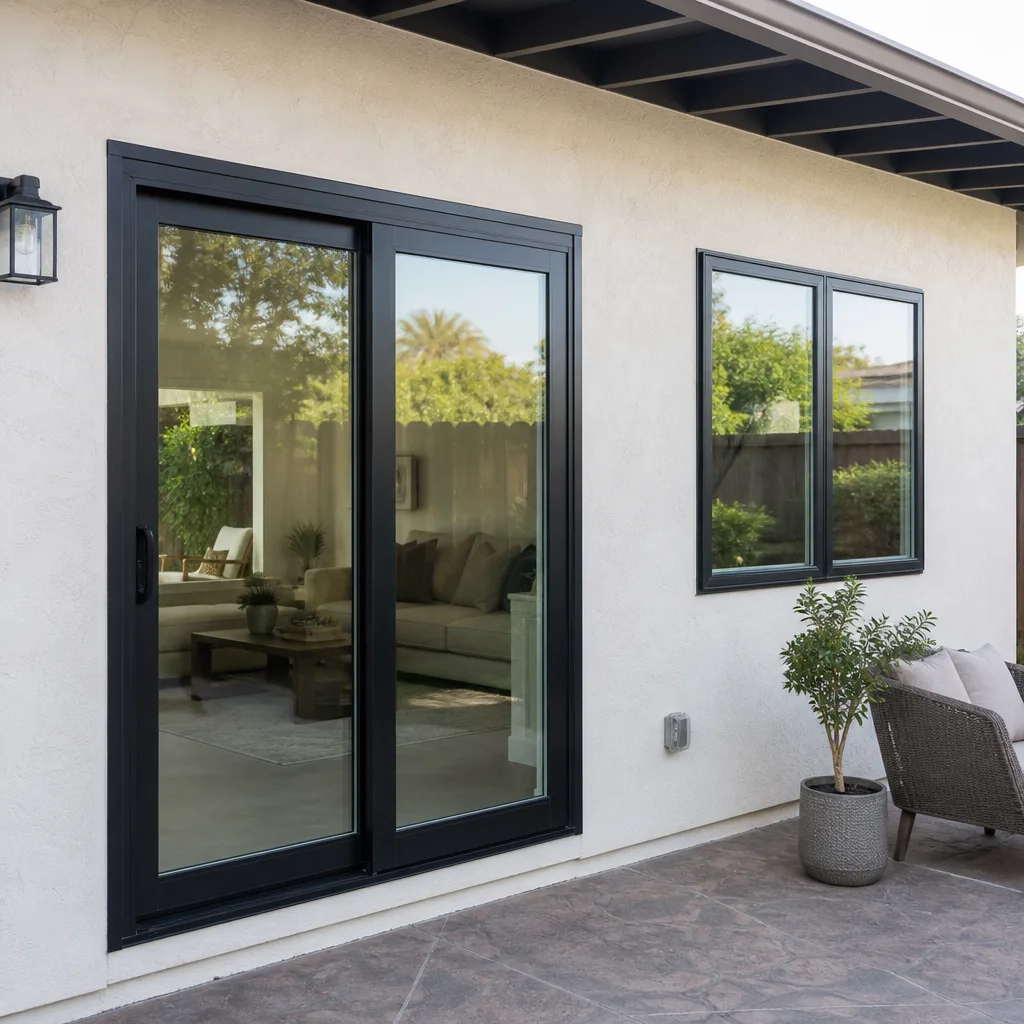 After
After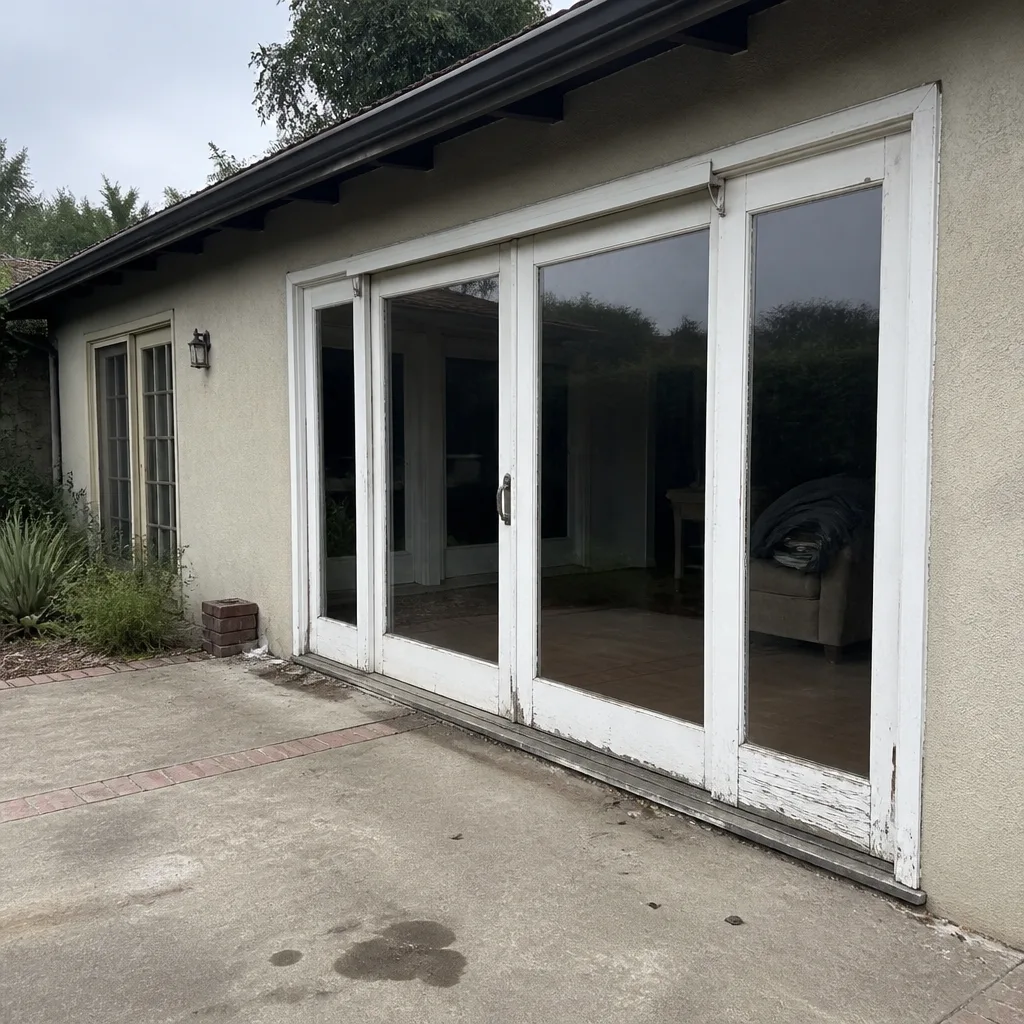 Before
 After
AfterDIY vs Professional Patio Door Installation: What’s Safe to Do Yourself
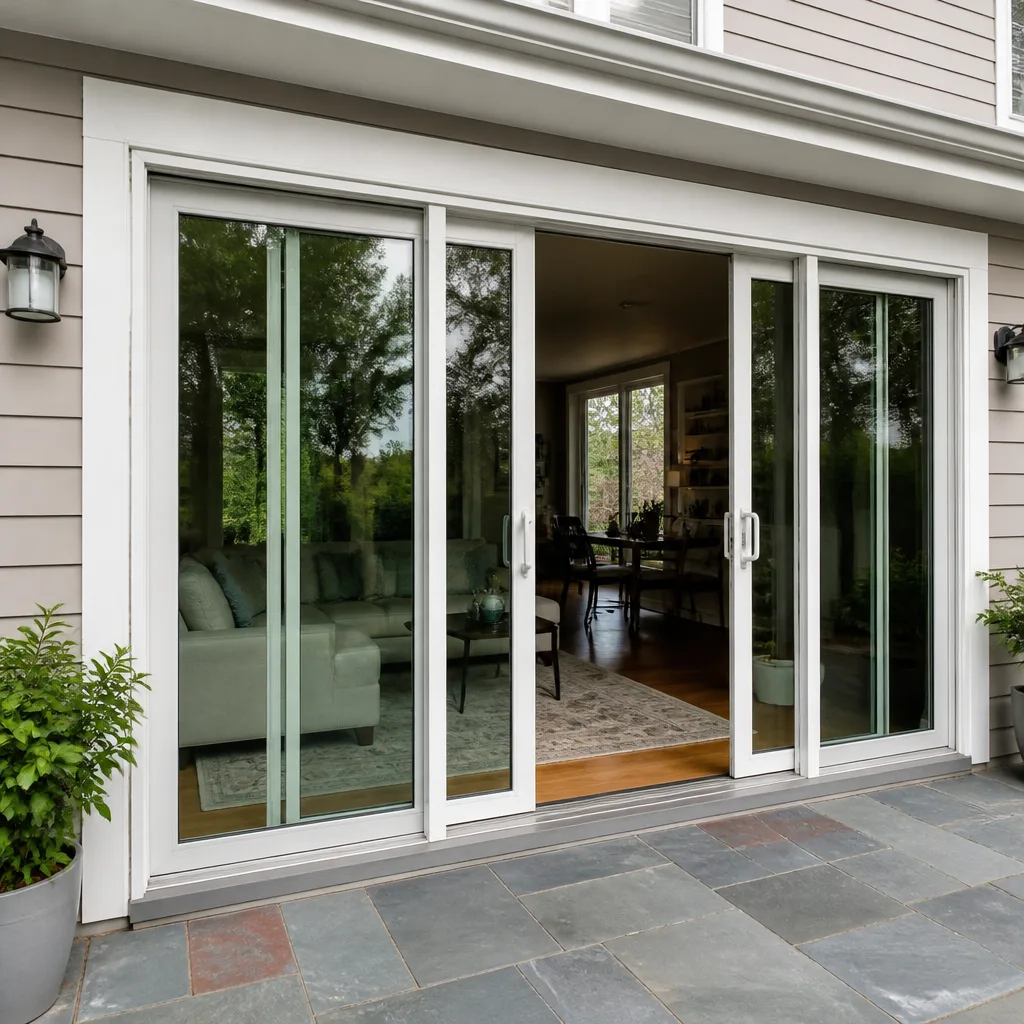
A patio door is the largest moving part in most Los Angeles homes, and it is also the single biggest hole in your thermal envelope. Get the install wrong and you are not just fighting a sticky roller. You could be looking at water intrusion into the stucco, a sagging header that cracks the drywall above, or a permit violation that surfaces during escrow and costs more to fix than the original installation would have. This guide draws a hard line between the tasks a capable homeowner can safely handle on a Saturday and the work that belongs to a licensed contractor during Patio Door Installation. We will walk through specific tasks, real permit triggers, and the tool inventory the job actually demands, so you know exactly where to stop and hand off.
Quick Answer
Safe DIY patio door work is limited to maintenance and finish adjustments: track cleaning, roller lubrication, weatherstrip replacement, hardware adjustment, and interior trim or painting. Anything that requires removing the door frame, enlarging the rough opening, touching the structural header, or pulling a building permit crosses into licensed-contractor territory under California law. In Los Angeles, a like-for-like door swap in the same rough opening is often permit-exempt, but changing the opening size or adding a new exterior door is not. For a deeper look at this decision, see our guide on DIY vs Professional Window Installation: What’s Safe to Do Yourself.
Table of Contents
- What Is Genuinely Safe to Do Yourself
- What Crosses Into Professional Territory
- The Los Angeles Permit Trigger You Need to Know
- The Real Tool and Skill Inventory for a Door Swap
- How to Split the Project to Capture Real Savings
- What Each Route Costs in Los Angeles
- Common Mistakes to Avoid
- When to Call a Professional
- Frequently Asked Questions
- The Bottom Line
What Is Genuinely Safe to Do Yourself
Let us start with the work that will not get you into trouble. These tasks sit on the finish side of the door and do not touch the structural frame, the weather barrier, or the load path. A homeowner with a screwdriver, a shop vacuum, and thirty minutes can do all of them.
Track cleaning and roller lubrication is the highest-value DIY task on a sliding patio door. In Los Angeles, the combination of fine dust, coastal salt air near Santa Monica and Venice, and the occasional Santa Ana wind event means door tracks accumulate grit faster than almost anywhere else in the country. That grit grinds down rollers and makes the door feel heavy and stubborn. Clean the track with a vacuum and a stiff brush, wipe it with a damp rag, and apply a dry silicone spray to the rollers. Do not use WD-40 or any oil-based lubricant. Oil attracts dust and turns into a paste that makes the door worse within a month.
Weatherstrip replacement is the second genuinely homeowner-safe task. The felt, rubber, or brush seals around a patio door degrade from UV exposure, which is relentless in Los Angeles, and from use. You can buy replacement weatherstrip at most home centers. Pull out the old strip, press or slide in the new one, and test the door. If the door now closes with even resistance and you cannot feel air movement around the edge, you did it right. This is a finish-level repair, not a structural one, and it will not trigger any permit requirement.
Hardware adjustment is the third safe zone. A patio door handle that wiggles, a latch that will not catch, or a lock that binds is usually a matter of loosening two screws, realigning the plate, and tightening everything back down. You are not removing the door panel. You are not touching the frame. You are adjusting what is already installed, and that is squarely within a homeowner’s reach.
Interior casing and paint finish work rounds out the safe list. If you want to repaint the interior trim around your patio door, replace the casing, or touch up baseboards, that is cosmetic finish work. It does not affect the structural integrity of the opening and no Los Angeles building inspector will ever look at it.
What Crosses Into Professional Territory
The line is not about how handy you are. The line is about liability, code, and consequence. Once a task crosses that line, doing it yourself can create a defect that must be disclosed when you sell your home.
Under California Business and Professions Code, any construction project valued at $500 or more in combined labor and materials requires a contractor’s license. That threshold is absurdly easy to cross on a patio door. A mid-range sliding door unit alone runs $800 to $1,200 in Los Angeles, and that is before installation. Even if you are only “paying yourself in sweat,” the work you are performing would require a license if you hired someone else to do it.
Three categories of patio door work are squarely in professional territory:
- Structural header work. Any patio door opening wider than 6 feet typically has a load-bearing header above it. In Los Angeles, with seismic code requirements that most of the country does not face, that header is engineered, not guessed at. Touching it, shimming it, or “adjusting” it is structural work with seismic consequences.
- New opening creation in an exterior wall. Cutting a new hole in an exterior stucco wall for a patio door means cutting studs, installing a new header, adding king and jack studs, and reframing the opening to current code. This is framing work, it is structural, and it absolutely requires a permit.
- Any job that requires a building permit. If the work triggers a permit, the work requires a licensed contractor to pull it. End of discussion. A homeowner can pull an owner-builder permit in some California jurisdictions, but doing so makes you legally responsible for code compliance, and if that work fails, you own the liability entirely.
We have seen what happens when a capable homeowner removes a patio door frame on a Los Angeles stucco house and discovers that the original flashing was never properly integrated with the water-resistive barrier. Water had been wicking into the wall cavity for years, hidden by the stucco. The homeowner now has an open wall, a moisture problem, and no clear path forward. That is not a Saturday project. That is a professional repair with a real scope of work.
The Los Angeles Permit Trigger You Need to Know
The Los Angeles Department of Building and Safety has a specific rule that most homeowners do not know. Replacing a patio door in the same rough opening, with a new door of the same size, is typically exempt from a building permit. You are swapping a unit, not modifying the structure. This means a like-for-like replacement, even one that requires pulling the old door and frame and installing a new one, usually does not require a permit in the City of Los Angeles.
Enlarging the rough opening is a different story. If you want a wider sliding door, a taller multi-slide unit, or a French door where a sliding door used to be, the rough opening changes. That means new framing, a new header, new shear wall considerations under seismic code, and a permit. This is not a gray area. It is a bright line.
Adding a new patio door where one did not exist is the third category, and it is the most expensive and code-heavy option. You are creating a penetration in the exterior wall envelope, which affects structural shear capacity, waterproofing continuity, and energy code compliance under Title 24. The California Energy Commission has specific requirements for fenestration in residential buildings, and a new opening must meet those requirements with product documentation.
In our experience across Los Angeles neighborhoods from Encino to Silver Lake, most homeowners who attempt an unpermitted opening enlargement do so because they want a 12-foot multi-slide door and think the permit will slow them down. What actually slows them down is the disclosure requirement when they sell. An unpermitted structural modification becomes a material defect. It must be disclosed in the real estate transaction. Buyers frequently demand a retroactive inspection, which means opening the wall again to prove the header, shear transfer, and waterproofing are correct. That retroactive inspection and the associated corrections cost more than doing the permitted work correctly the first time.
The Real Tool and Skill Inventory for a Door Swap
Most patio door installation tutorials assume you own more tools than you do and that your house is friendlier to work on than it is. A Los Angeles house built in the 1950s with original stucco and minimal insulation is a very different job site from a new construction tract home with plywood sheathing and Tyvek.
Here is the honest tool inventory for a like-for-like patio door replacement on a stucco home:
- A four-foot level and a two-foot level. You need both. Setting a patio door frame level and plumb in two planes is not optional. A door that is out of level by 1/8 inch over 6 feet will bind, drag, or fail to latch properly.
- A reciprocating saw with a long demolition blade. Removing an old patio door frame from a stucco opening means cutting fasteners and cutting through whatever caulk, foam, or construction adhesive the original installer used.
- An impact driver with at least two batteries. The screws holding a patio door frame to the rough opening are structural fasteners. A regular drill will struggle.
- A proper shim kit, not scraps. Setting the frame correctly requires graduated shims. Scrap wood shims compress unevenly and cause the frame to shift after the door is installed.
- Backer rod, flashing tape, and a polyurethane sealant. These are not optional. Water intrusion at the sill and drip cap is the number one failure point on patio door installations in Los Angeles, where we get just enough winter rain to test your flashing and just enough dry heat to bake caulk brittle.
- A helper or a panel lifter. A patio door panel, depending on the glass package, weighs between 120 and 250 pounds. You cannot safely set a panel that size alone.
Now the skill inventory. Setting a patio door in a rough opening that is not square, plumb, or level requires the ability to diagnose the deviation, shim and adjust the frame to compensate, and then flash it correctly. That is a three-dimensional problem. If your rough opening is 1/2 inch out of square corner to corner, which is common on older Los Angeles homes, the frame must be set to split the difference so the operable panel tracks correctly. That is not a skill most homeowners have practiced, and the cost of learning on your own exterior wall is measured in water damage.
How to Split the Project to Capture Real Savings
The smart split is where the savings actually live. You hire a licensed installer for the structural work: removing the old door, preparing the rough opening, setting the new frame, flashing the perimeter, and installing the operable panels. Then you handle the interior finish work: casing, trim, caulk lines, and paint. This is the model we recommend to homeowners across Los Angeles who want to participate in the project without taking on the structural consequence.
Here is why the split works. The structural and weatherproofing work is where a failed DIY job causes the expensive damage. A failed caulk line on interior casing is a cosmetic problem you can fix in an afternoon. A failed flashing seal at the sill is a water intrusion problem that can rot framing, attract termites, and require stucco repair. One of those mistakes costs you a tube of caulk. The other can cost you a new wall section.
The split also respects the permit boundary. The licensed installer pulls any required permit, which means the structural and waterproofing work is on record with the city, inspected, and cleared. The interior finish work you choose to do yourself sits entirely outside the permit scope. You get a legitimate, documented install plus the satisfaction and savings of finishing the interior your way.
This is exactly the model we use at Meridian Windows & Doors. Our patio door installation includes the full structural and weatherproofing scope, and homeowners who want to handle the interior trim and paint are welcome to do so. The price goes on paper before any work starts, and it covers the structural work in clear line items, so you know what you are paying for and what you are saving by doing the finish work yourself.
What Each Route Costs in Los Angeles
Understanding the actual numbers will help you make a clear-eyed decision. These ranges reflect the Los Angeles residential market as we see it, where material costs, labor rates, and permit fees all run higher than the national average.
- DIY like-for-like door swap (no permit required): $800 to $1,500 for the door unit, $150 to $400 for tools, flashings, shims, and sealants, and your own labor. Total out-of-pocket runs $950 to $1,900. If it goes wrong, the corrective work can run $3,000 to $8,000 depending on water damage and structural repair scope.
- Professional like-for-like replacement (no permit required): $1,800 to $3,500 installed, including removal and haul-away of the old door, labor, flashings, sealants, and warranty coverage. This is the Patio Door Installation in Los Angeles price range we work within at Meridian.
- Professional opening enlargement or new opening (permit required): $4,000 to $9,500 installed, depending on door size, manufacturer line, header engineering, seismic retrofit scope, and stucco repair. This range reflects the reality that you are modifying the structure, not just replacing a unit.
The $1,000 to $1,600 difference between a DIY like-for-like swap and a professional like-for-like install is not the cost of labor. It is the cost of removing consequences that you would otherwise own personally. The professional install includes a written guarantee, which a DIY install does not.
Common Mistakes to Avoid
- Using oil-based lubricant on the track and rollers. Oil attracts the fine dust that blows through every Los Angeles neighborhood and creates a grinding paste that wears out rollers faster than if you had done nothing.
- Assuming a patio door is not structural because it is glass. Any exterior door opening wider than 6 feet has a load-bearing header above it. Glass has nothing to do with it. The header is carrying the weight of the roof and, in Los Angeles, the seismic load of the wall assembly.
- Removing the old door before measuring the new one against the rough opening. Once the old door is out, you are committed. Measure the rough opening width, height, and diagonal corner-to-corner dimensions before you order anything, and before you remove anything.
- Caulking the bottom of the frame. The sill must be able to weep any water that gets past the door. Caulking the bottom edge of the frame traps water and guarantees rot. We see this mistake on older Los Angeles homes in the San Fernando Valley more than anywhere else, often from previous DIY attempts.
- Skipping the flashing tape at the sill and drip cap. Stucco houses are unforgiving. Water that gets behind the stucco at the patio door opening has a direct path into the wall cavity. Flashing tape is the last line of defense, and it costs $30.
- Enlarging the rough opening without a permit because “it will be fine.” It will not be fine at resale. It becomes a disclosure item, a buyer objection, and a retroactive inspection that opens the wall again.
- Underestimating the weight of the glass panel. Patio door panels are the heaviest single item most homeowners will ever move. A drop during the install can mean a broken panel, a broken foot, or a damaged floor, sometimes all three.
When to Call a Professional
Call a professional when the job requires removing the door frame from the rough opening, changing the rough opening size, adding a new opening, or touching the structural header. Also call when the existing opening is visibly out of square, the sill shows signs of water damage, or the house is stucco and the flashing needs to be integrated with the existing weather-resistant barrier. None of these are homeowner tasks. Meridian Windows & Doors offers free estimates in Los Angeles. Call (817) 686-2228 and we will give you a written price before any work starts.
Frequently Asked Questions
No, a like-for-like patio door replacement in the same rough opening with the same size door is typically exempt from a building permit in the City of Los Angeles. Enlarging the opening or adding a new patio door where one did not exist requires a permit and a licensed contractor. Call (817) 686-2228 for a free estimate and we will tell you up front which category your project falls into.
A professional like-for-like patio door replacement in Los Angeles typically runs $1,800 to $3,500 installed, while a new opening or enlarged opening with structural work runs $4,000 to $9,500. The price is set on paper before any work starts at Meridian, and it does not move at the door. Call (817) 686-2228 for an exact quote.
You can safely handle finish-side work: track cleaning, roller lubrication, weatherstrip replacement, hardware adjustment, and interior trim and painting. You should not attempt to remove the door frame, enlarge the rough opening, or touch the structural header. Those tasks cross into licensed-contractor territory under California law and create liability that follows the house at sale.
The most common DIY mistake we see on Los Angeles stucco homes is failing to properly flash the sill and drip cap. Water that gets behind stucco at the door opening has a direct path into the wall cavity, and the resulting rot is expensive to repair. This is exactly why our Window Replacement in Los Angeles and patio door installations include full weatherproofing as a line item, not an afterthought.
Yes, and this is the smart way to capture real savings. Hire a licensed installer for the structural and weatherproofing work, including the permit if required, then handle the interior casing, trim, caulk, and paint yourself. The structural work is where the liability lives, and the finish work is where the savings live.
A like-for-like patio door replacement in Los Angeles is typically completed in one day, including removal, frame setting, flashing, and panel installation. A new opening or enlarged opening can take two to three days depending on framing, stucco repair, and inspection scheduling. Call (817) 686-2228 and we will give you a written timeline with your estimate.
The Bottom Line
The line between DIY and professional patio door work is not about how handy you are. It is about what you are personally liable for when the job is done. Finish-side work, from track cleaning to interior trim, is genuinely safe for a capable homeowner and can save you a few hundred dollars. Structural work, from frame removal to opening enlargement, is licensed-contractor territory that carries permit, seismic, and water intrusion consequences. In Los Angeles, the smart play is the split: hire a licensed pro for the structural and weatherproofing scope, handle the interior finish yourself, and get every dollar on paper before the screw turns. Explore more guides & resources for your next project.
Written by Elliot Vance, Owner at Meridian Windows & Doors, serving Los Angeles since 2009.