
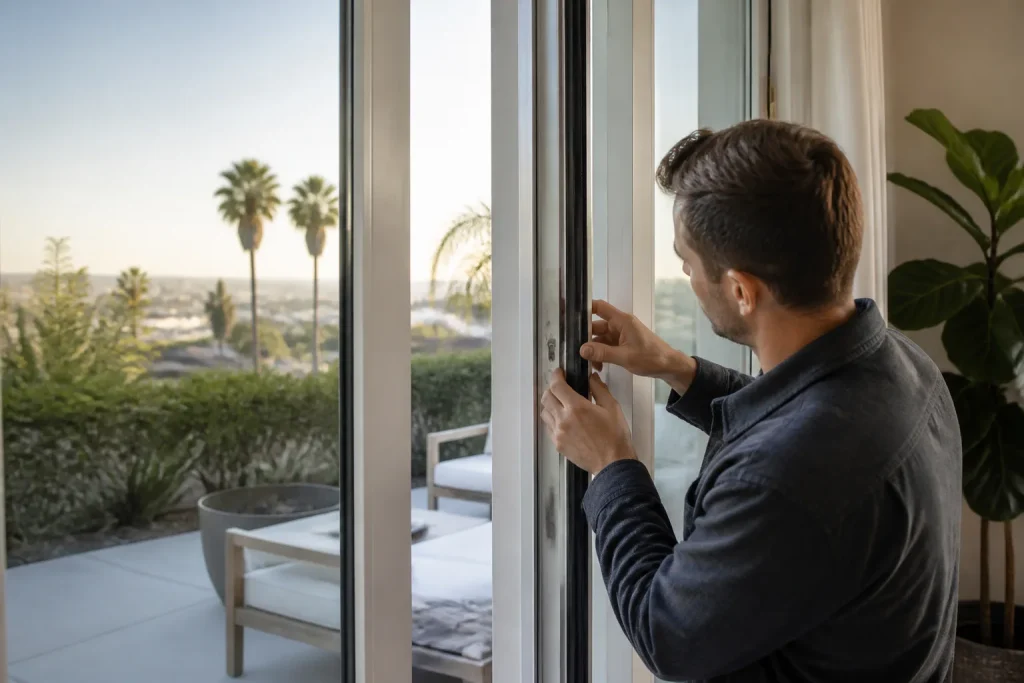
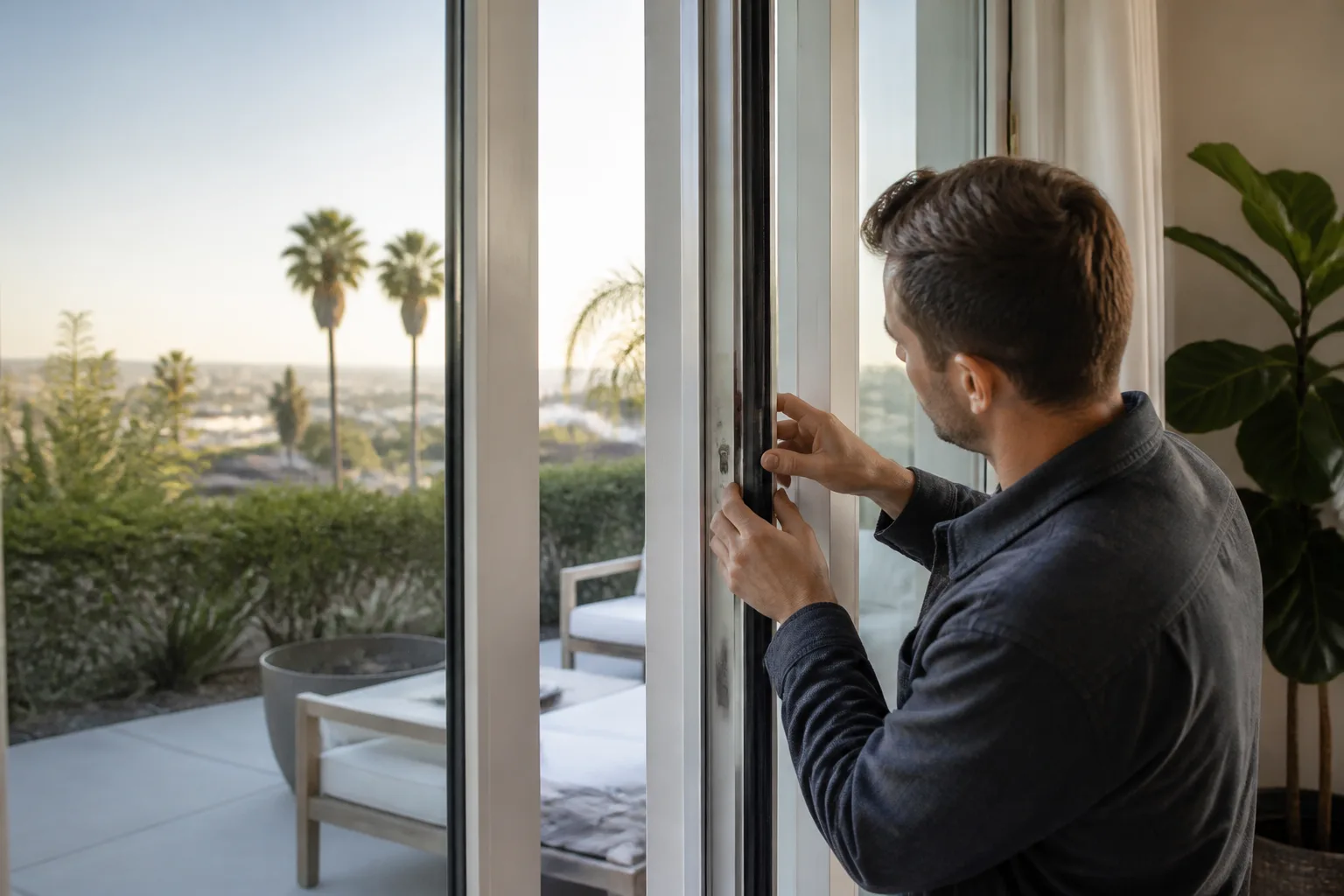
Preparing Your Home’s Windows & Doors for Winter in Los Angeles
Preparing your windows and doors for winter in Los Angeles means resealing exterior caulk joints, checking weatherstrip compression, and testing thresholds before the first heavy rain. The failure points are predictable: head flashing gaps, sill caulk separation, compressed weatherstrip, and sliding-door threshold seals. If you’d rather not climb a ladder with a caulk gun, call (817) 686-2228 and we’ll inspect every opening on the house.
The January 2023 atmospheric river dropped 9 inches of rain on Los Angeles in eight days. The insurance claims that followed told a clear story: most window-related water intrusion traced back to failed exterior caulk joints that homeowners could have resealed for under $30 in November. That’s the whole point of pre-winter prep here. LA doesn’t freeze pipes, but a wet year delivers 60-plus inches of rain, hillside neighborhoods see 40-degree overnight drops, and Santa Ana events drive rain horizontally at 50 mph into the northeast face of your house. Every skipped caulk joint and compressed weatherstrip seal gets exposed.
Why LA’s Wet Season Is Harder on Windows Than People Expect
Most Los Angeles homes are detailed to shed rain from the west and south, which is where the normal winter storms come from. That works until a Santa Ana wind event reverses the direction and drives rain from the northeast. Suddenly the back bedroom window that never sees weather is taking 50 mph wind-driven rain at an angle it was never caulked to handle.
We’ve seen this pattern repeat for years in neighborhoods from Sherman Oaks to Pasadena. The windows facing the northeast exposure are always the first to leak, and they’re almost always the ones the homeowner never thought about. The fix is simple: identify which windows face northeast and prioritize those during your inspection. Walk the exterior on a dry weekend and make a list. That list is your work order for the month.
The other factor is the rain itself. Los Angeles gets most of its annual rainfall in a handful of intense events, not spread evenly across the season. Nine inches in eight days is not unusual. That means your seals don’t get to dry out between storms. A small gap that would survive a normal rain cycle fails completely when the frame stays saturated for a week. The inspection sequence below targets exactly those conditions.
The Room-by-Room Inspection Sequence That Finds the Real Problems
Start inside, not outside. The interior tells you where water has already been, and that information is more reliable than anything you’ll see from a ladder. Work room by room, and do it before the first storm, not after the drywall is stained.
Here’s the sequence we use on every pre-winter inspection in Los Angeles:
- Head flashing gaps: Look at the top of each window from outside. The head flashing is the metal or vinyl strip that sheds water off the top of the frame. If it’s pulling away from the wall or missing entirely, water runs behind it and down the inside of the wall.
- Sill caulk separation: The bottom of the window frame, where it meets the stucco or siding, is the most common failure point in Los Angeles. Temperature swings expand and contract the frame, and caulk loses adhesion over time. If you can slide a putty knife under the caulk bead, it’s done.
- Weatherstrip compression loss: The fuzzy or rubber strip that seals the sash to the frame compresses over time. Once it loses its spring, air and water get through.
- Threshold seal deterioration on sliding doors: The threshold is the raised lip at the bottom of a sliding door. It should have a flexible seal that the door panel presses against. If that seal is cracked, flattened, or missing, wind-driven rain runs straight under the door.
Each of these has a specific test and a specific fix. The next sections walk through them in detail, including the thresholds for when a repair is no longer a weekend job.
How to Test Weatherstrip Without Tools: The Dollar-Bill Drag Test
The dollar-bill drag test is the fastest way to check weatherstrip compression on every window and door in the house. Close the window or door on a dollar bill. If the bill slides out with no resistance, the seal has lost its grip and air is passing through freely. If the bill stays put or takes a firm tug to remove, the weatherstrip still has compression left.
Here’s what the results mean in practical terms for a Los Angeles winter:
- No resistance at all: The weatherstrip is flat-lined. It will not stop wind-driven rain from a Santa Ana event. Replace it before the wet season.
- Slight resistance: The seal is marginal. It might survive a normal drizzle, but a 50 mph northeast wind will find the gap. Plan to replace it within the month.
- Firm resistance: The seal is holding. Mark it as checked and move on.
Weatherstrip is cheap. A roll of adhesive-backed foam or a replacement compression seal for a double-hung window runs $15 to $40 per opening, and most homeowners can handle the replacement on their own in about 20 minutes per window. The trick is testing every window, not just the ones in the rooms you use most. The guest bedroom window that no one opens is the one that leaks at 3 a.m. during an atmospheric river.
We’ve pulled plenty of moldy, swollen weatherstrip out of window frames across Los Angeles, and the common thread is always the same: nobody noticed it because nobody used the window. The dollar-bill test takes 30 seconds and removes the guesswork. Do it before the rain starts, and do it on every opening, not just the ones you touch.
Caulk Selection: Why the Wrong Product Fails Before the First Storm
Not all caulk works on every LA wall assembly. The wrong product will peel, crack, or fail to bond within a season, and you’ll be redoing the job in March instead of enjoying dry walls. The rule is simple:
- Painted wood trim: Use paintable siliconized latex caulk. It bonds well to painted surfaces, holds paint, and flexes enough to survive LA’s temperature swings. A tube runs $6 to $10 at any hardware store in Los Angeles.
- Stucco-to-frame joints: Use pure silicone caulk. Stucco expands and contracts at a different rate than window frames, and silicone is the only product with enough elasticity to hold that joint through a full wet season. It is not paintable, so match the color at the store.
The failure we see most often in LA is silicone on painted trim. It looks fine for about six months, then it peels off in sheets because silicone doesn’t bond to paint, and now the joint is exposed just in time for the January storms. The second most common mistake is painter’s caulk on exterior joints. Painter’s caulk is designed for interior trim, not weather exposure. It cures hard, cracks under movement, and lets water through after the first thermal cycle.
For the record, a proper caulk job on a single window takes about 45 minutes, including cutting out the old bead and tooling the new one. The material cost is under $15. Compare that to the cost of repairing water-damaged drywall and repainting, which runs $500 to $1,200 per window in Los Angeles, and the math is obvious.
Santa Ana Wind Exposure: The Northeast-Facing Windows You Keep Forgetting
Most LA homes shed rain from the west and south. That’s the prevailing storm direction, and most window detailing from the original construction reflects it. But Santa Ana wind events come from the northeast, and they push rain at 50 mph into the side of your house that has the least protection.
Here’s how to identify your exposure and prioritize repairs:
- Stand in your front yard with a compass app and find northeast.
- Walk the side of the house facing that direction and list every window and door on that wall.
- Inspect those openings first, starting with the top-floor windows, since wind-driven rain hits them hardest.
- Check the caulk joints, weatherstrip, and head flashing on those units before touching anything else on the house.
- If any northeast-facing window fails the dollar-bill test or shows caulk separation, fix it before the first Santa Ana event of the season.
The windows on the northeast wall are also the ones most likely to have dry-rotted exterior trim, because they sit in the shade most of the day and never fully dry out after a rain. Tap the trim with a screwdriver handle. If it sounds hollow or the wood gives, you’ve got rot, and that’s a replacement job, not a caulk job.
A compressed seal or a 2-millimeter caulk gap on a west-facing window might survive the season. The same issue on a northeast-facing window will leak during the first hard Santa Ana rain. That’s why the compass check comes first. It tells you where to spend your time and money.
When a $40 Caulk Job Becomes a Professional Assessment
Most pre-winter window prep is DIY work: caulk, weatherstrip, and threshold seals top out around $40 per opening. But some findings cross a line, and knowing where that line is saves you from turning a $40 fix into a $4,000 repair.
The specific condition that warrants a professional assessment is any evidence of prior water staining in the drywall below a window. That’s the tell that water has already penetrated the wall cavity, which means the failure is not at the surface seal but at the flashing. Flashing is the hidden waterproofing layer that directs water around the window opening and out the weep holes. When it fails, no amount of caulk on the outside will stop the leak, because the water is getting in behind the frame.
Here’s what to look for:
- Brown or yellow staining on the drywall directly below or beside a window
- Paint bubbling or peeling in the same area
- A musty smell in the room after heavy rain
- Swollen baseboards near an exterior wall
- Visible gaps between the window frame and the wall when viewed from the inside
Any one of these means water has already found its way into the wall. The fix almost always requires removing the window, replacing the flashing, reinstalling the unit, and repairing the interior damage. That’s a job for a crew that pulls permits and stands behind the work, not a Saturday caulk project.
If in doubt, call. A written estimate costs nothing, and it answers the question definitively. We’d rather spend 45 minutes telling you the caulk is fine than have you discover the flashing failed in the middle of the first big storm.
The Bottom Line
Preparing your windows and doors for winter in Los Angeles comes down to four jobs: reseal exterior caulk joints, test weatherstrip with a dollar bill, check thresholds on sliding doors, and mark the northeast-facing openings for priority attention. Do it in November, before the atmospheric rivers arrive. The January 2023 storm taught every contractor in Los Angeles the same lesson: the $30 caulk job done in November prevents the $1,200 drywall repair done in February.
If you’re in Los Angeles and need help, Meridian Windows & Doors offers free estimates. Call (817) 686-2228 and we’ll walk the house with you, identify every failing seal, and put the price on paper before any work starts. No pressure, no change orders at the door, just a straight answer about what needs to be done and what it costs.
Related services in Los Angeles: Window Replacement in Los Angeles and Window Installation in Los Angeles. If your sliding door threshold has failed beyond repair, see Patio Door Installation in Los Angeles.
Frequently Asked Questions
Reseal exterior caulk joints, test weatherstrip with the dollar-bill drag test, check sliding-door thresholds for cracked seals, and prioritize any window facing northeast. Those four steps target the specific failure points that LA’s wet season exploits: head flashing gaps, sill caulk separation, compression loss, and threshold deterioration. Material cost for a full house typically runs $100 to $300 if you do the work yourself. Call (817) 686-2228 for a free estimate if you’d rather have a professional handle it.
Close a window on a dollar bill. If the bill slides out with no resistance, the weatherstrip has lost its compression and the seal is failing. The same test works on doors. Other signs include visible daylight around the sash edges, drafts you can feel on a cold morning, and condensation between double-pane glass, which means the hermetic seal has failed and the glass unit needs replacement.
Yes. Caulk is the cheapest, highest-impact winter prep you can do, and November is the time to do it. Use paintable siliconized latex on painted wood trim and pure silicone on stucco-to-frame joints. A single tube runs $6 to $10, and a proper job on one window takes about 45 minutes. The cost of skipping it is water-damaged drywall at $500 to $1,200 per window. Call (817) 686-2228 if you’re unsure which product to use.
Call a professional when you see water staining in the drywall below a window, which means the flashing has failed and surface caulk will not fix the leak. Also call if the window is on the second floor and requires ladder work you’re not comfortable with, or if the frame is rotted beyond what a caulk bead can seal. Meridian Windows & Doors offers free estimates in Los Angeles. Call (817) 686-2228 and we’ll assess, price the work in writing, and let you decide.
Want to learn more about how we approach window work? Here is more on Meridian Windows & Doors home.
Written by Elliot Vance, Owner at Meridian Windows & Doors, serving Los Angeles since 2009.
Need Windows & Doors Help?
Call Meridian Windows & Doors - licensed & insured, here with fast after-hours help in Los Angeles.
(817) 686-2228